November 23

This will probably be my last post from Japan as we leave very early Tuesday morning to head back to Montreal and Stowe. Let’s talk about the train system in Japan. The trains arrive to the second, they are incredibly clean, and the signage where you need to stand to get into your particular car is excellent. The speed of the Shinkenhansen, the main train line between major cities, gets you to places so quickly you can understand why it is the way people travel throughout Japan. The tracks are smooth, the cars are immaculate and the seats are comfortable. I cannot understand why the U.S. does not make an investment in the rail system as it would solve so many issues with our crowded highways, and an alternative to flying. Even the local trains are fast, efficient, and clean.

Of course, one should know when someone says, “You won’t have any trouble finding your train”, you might as well figure the opposite will be true. You arrive at the train station, people are bombarding you from left, right and sideways, rushing toward some train, somewhere. Meanwhile you are standing, probably right in the way of people, gaping at the time table as it flashes at you in Japanese. Now you know it is surely going to change to English, as it does in every station, but until it does you might as well stop gaping and move aside so people can get around you. But you don’t. No, you stand there with your mouth open, schedule in hand, suitcase so embarrassed by you it is attempting to roll away and you pray the schedule will show up in English. When it does, your train or the name of your destination is not on the board. Seconds later it is back to Japanese and you are screwed until it rolls around again.

Eventually you see a time that looks like the time you are to board. If you are lucky you might recognize the name of your destination or else it doesn’t show at all and you have to figure out the final destination of the train, while determining if your stop is on the way. And throughout this process it has flipped to Japanese many times. As if this is not enough, you must buy your ticket. You have to find out where to buy the ticket, hoping you can find a ticket booth instead of approaching one of the many machines that spits out tickets. Those machines just act like sentinels of guards so foreboding you instinctively know you can’t conquer them.

You make it to the ticket booth, mind you, there is about 10 minutes between train transfers, and you desperately have to go to the bathroom, but you don’t even consider trying to find a bathroom because you might not make your train. The ticket taker points to the machine and there you are, back facing “The machine.” You approach and wow, you can select English as your language, you go through the menu, pick your destination, put your money in and out spits the ticket. All in about 5 minutes or less.

Then it is a dash to the right gate, get in line only to find you are not in the reserved ticket line, dash to the section of the train that has reserved seats, and throw yourself through the door as it is closing. Grab your seat, sit down and then you realize, you never went to the bathroom and you have an hour to your destination.

We met a thirty year old on our train to Uno who had just as much trouble figuring out the trains. So we know it is not our age. Did I mention that sometimes you have to carry your suitcase up and down many fights of stairs. Warning to all of you heavy, large bag travelers.

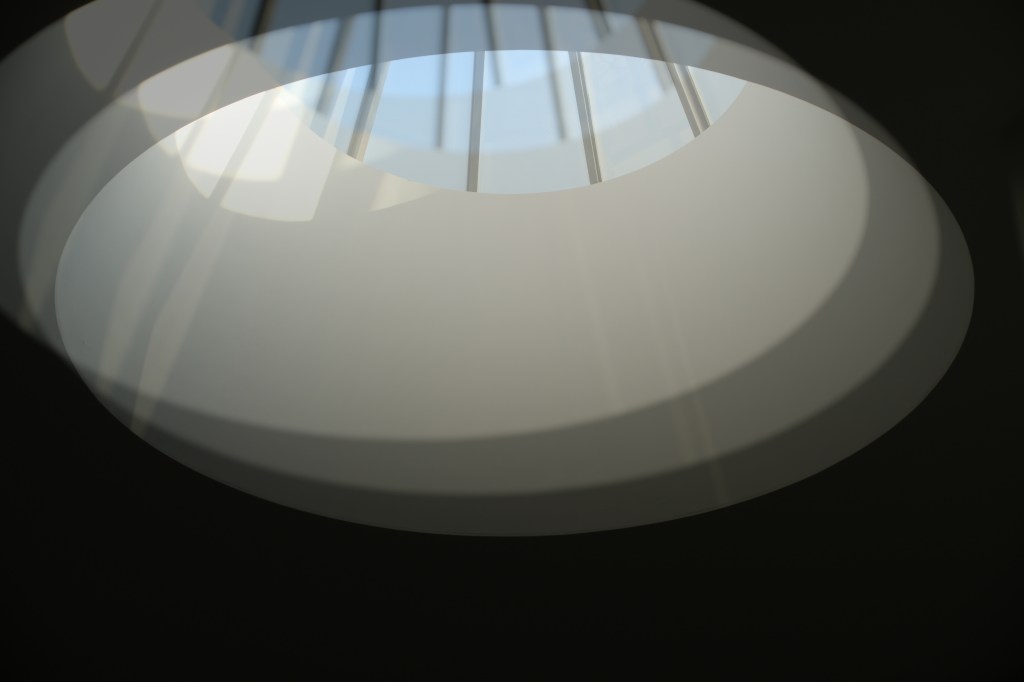
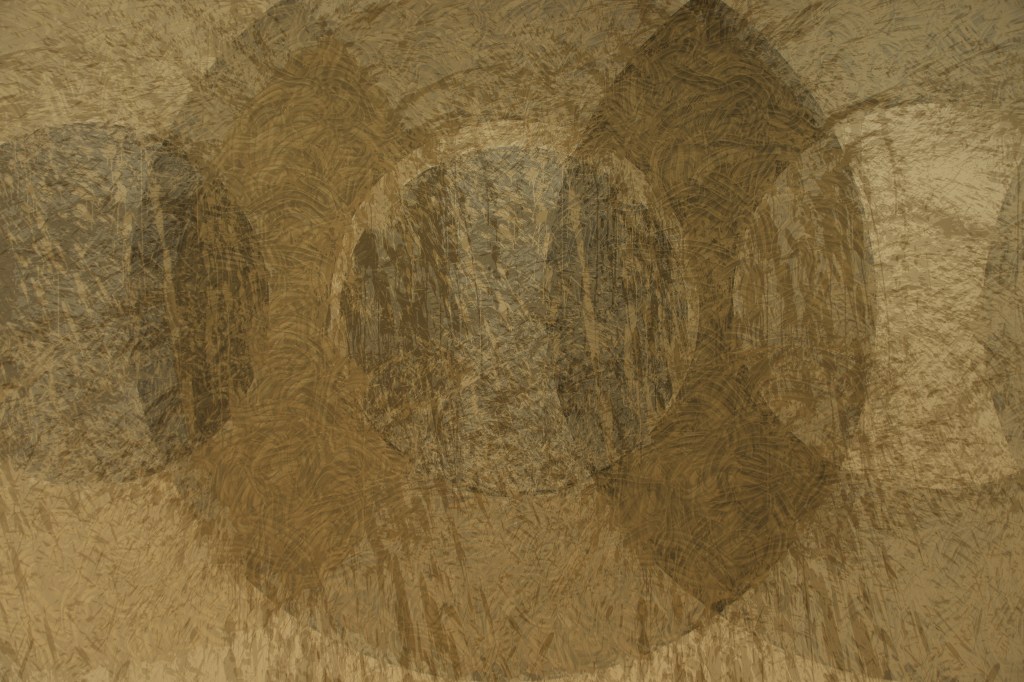
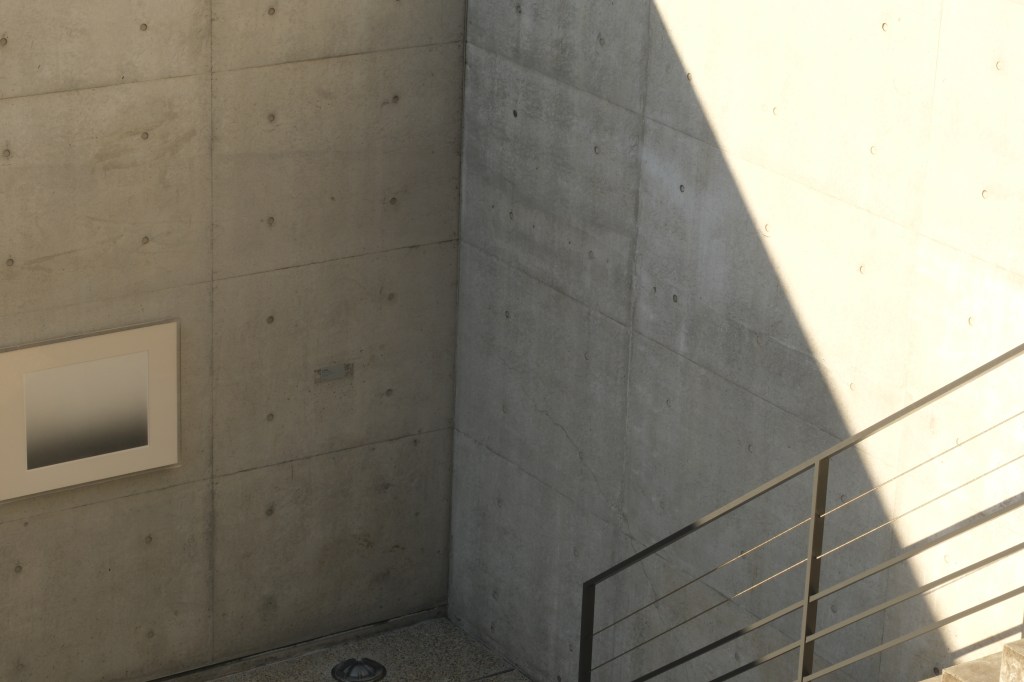
We were headed for Uno where we were catching the ferry to Naoshima Island for an afternoon of touring the island to see all of the famous outdoor sculptures and to go to the Benesse Museum. We really should have had several days, as the island is filled with museums, outdoor sculptures and magnificent views. The famous pumpkin sculpture by Yaoi Kusama is nearby the museum while the”cat” by Niki de saint Phalle stands along the roadside. Other beautiful sculptures dot the hillside looking toward the ocean. Inside the museum are some of my favorite artists, Frank Stella, Louise Nevelson, Giacometti, Lichtenstein, George Segal, and many more. What is truly amazing is the architecture of this museum designed by Tadao Ando. This museum was designed with large openings to allow the natural beauty of the island to be seen through large windows, or balconies therefore creating a space for nature to shine with the works of art.

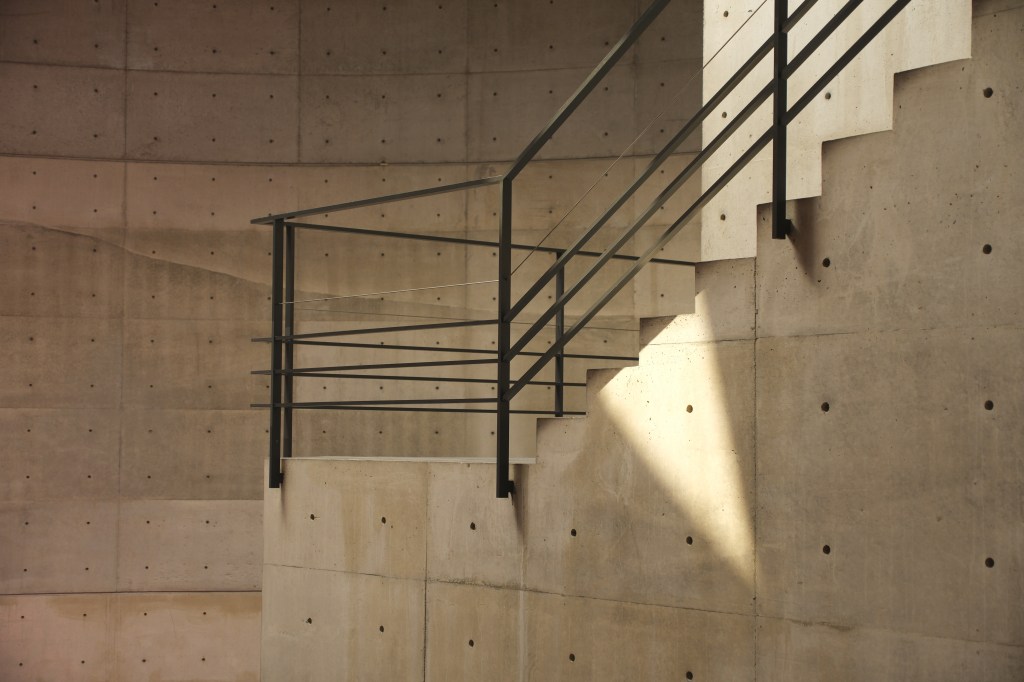
I have included some of my multiple images as this building and the surrounds spoke to me to try to express this art differently. Of course, the pumpkin is so famous I did not have time to create a multiple image as there was a line of people waiting to have their picture taken in front of the pumpkin. I had seconds to try to get a picture without people .

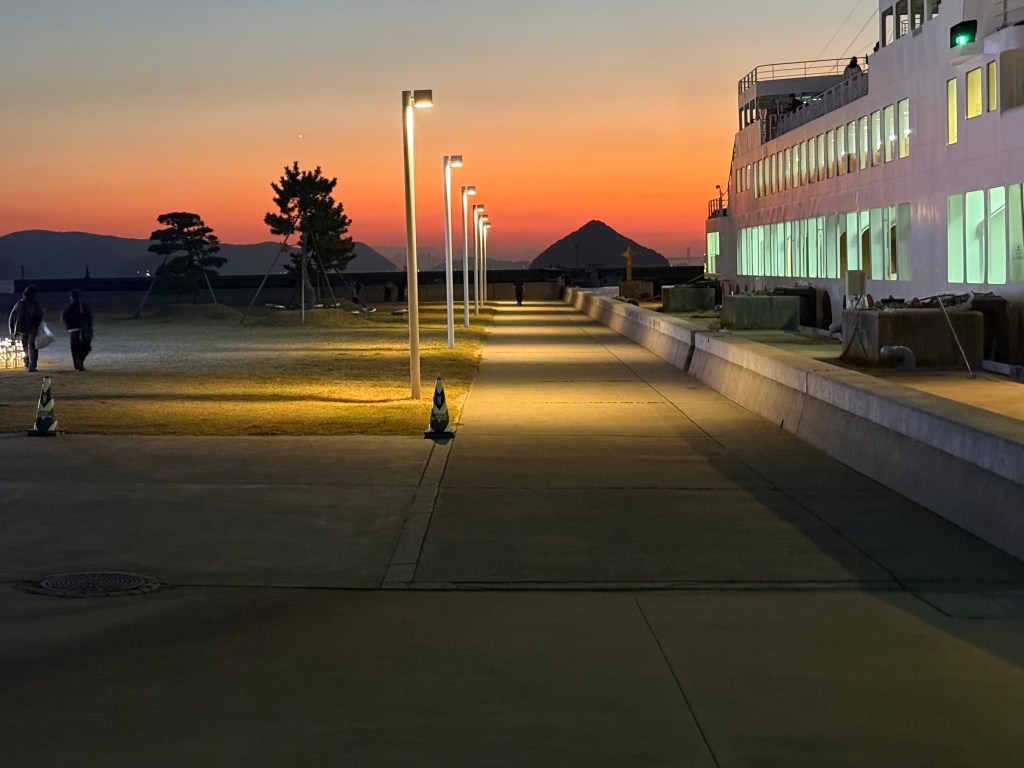
A ferry ride back to Uno in the dark, showed us the island in the last light as it pulled away from the terminal. Good-bye for now, perhaps you may get one more blog from me.

November 21-22

Yesterday was a travel day from Kizo-Fukushima to Nagoya, another major city which is known for its famous Nagoya Castle and the Atsuta Shrine. So there was not much to report except our excellent ability to navigate the train system.

The real reason we were in this city is because of the Arimatsu District, which was a town that was established in 1608 and was located along the Old Tokaido highway, a highway that connected Toyko and Kyoto. Unlike the Nakasendo Highway, this was used by the people of the area. The Nakasendo Highway was used by royalty such as the Samurai and the royal families. The old Tokaido was a pedestrian highway, few horses would pass by, and trade was done along the way by contracting people to take the wares to Kyoto or Toyko.

The town of this Arimatsu District was famous for the their unique form of tie-dyeing known as Shiborizome, or as we know it, shibori. This was one of the highlights of the trip for me. There is tie-dying we are familiar with on T-shirts, where we grab some material and tie rubber bands or string at various places and then dip the shirt in dye. Well, this method is like kindergarten to shibori. It was so much more complicated and the results were beyond beautiful.
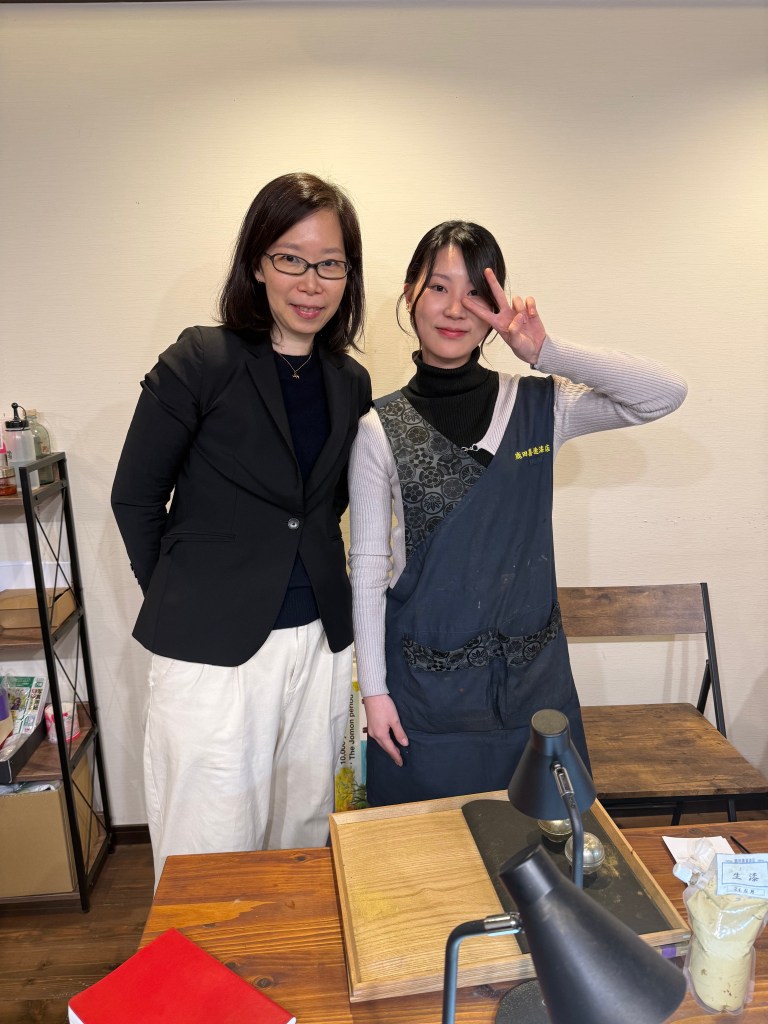
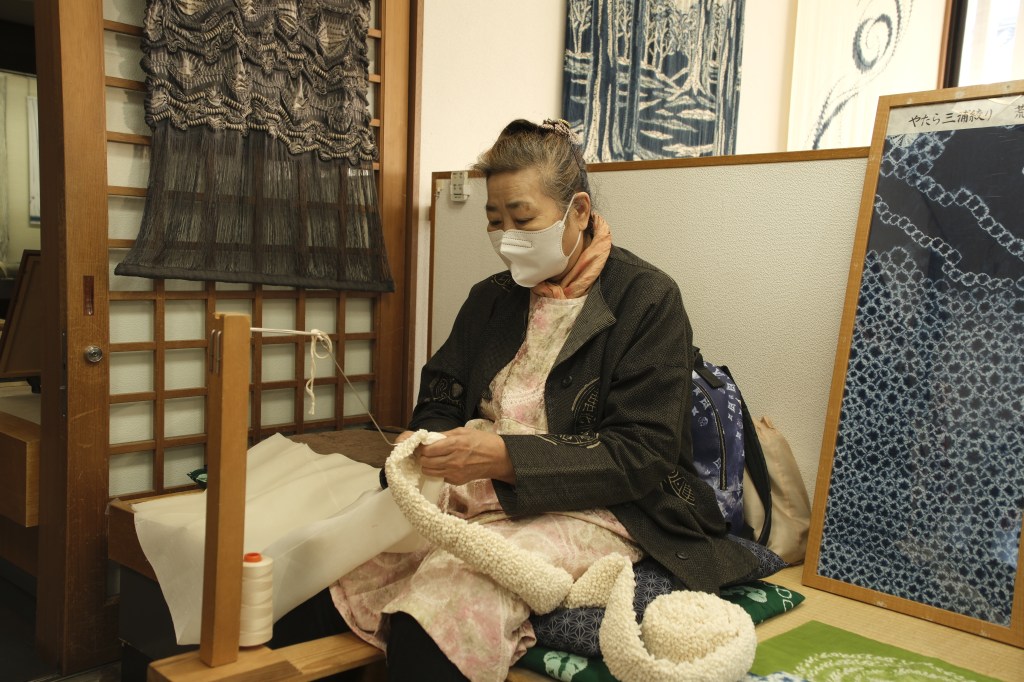
We went to a museum where there was a video of the shibori method, then examples through the history since before the 1600’s. There were two women demonstrating their methods. Each family has their own way of creating a pattern, none are written down but passed from generation to generation. If I developed a new pattern I could call it “Peggy Smith pattern.” I sat and watched while these women stitched the tiniest pieces of material together, pulling the stitch together in a circle and then wrapping the small piece of cloth that points out of the circle. It is hard to explain how it is done. They have just created this cone shape by bunching a small pinch of material together with a finger, wrapping it around a tiny wire and then winding thread around just the tip of the cone shape. Then they pull out the wire and go onto the next. Meanwhile every one of the “bumps” are in a straight line.

The other woman pleated the length of fabric, (precisely, I might add), wrapped it around a 1/2 inch round rope with a thin thread, then repeating, only this time she wrapped the material very tight with thread very close together. Then once it is tied to the rope, it is sent off to be dyed. I can’t even begin to explain it clearly but the tiny stitches and the painstaking preciseness amazed me.
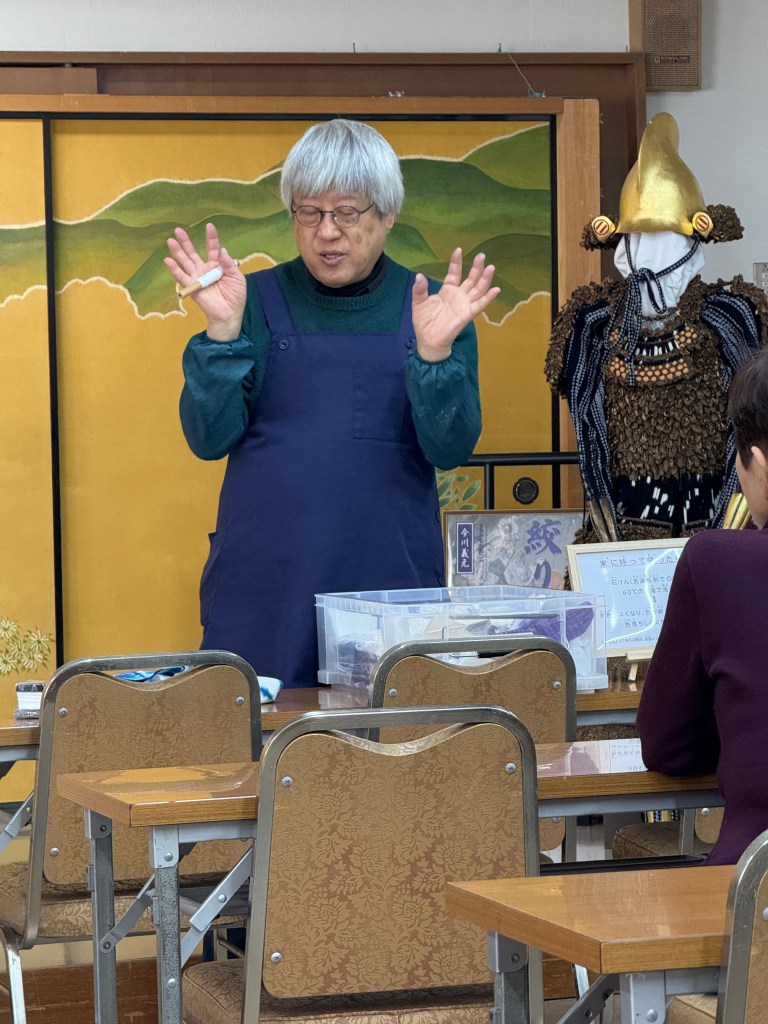
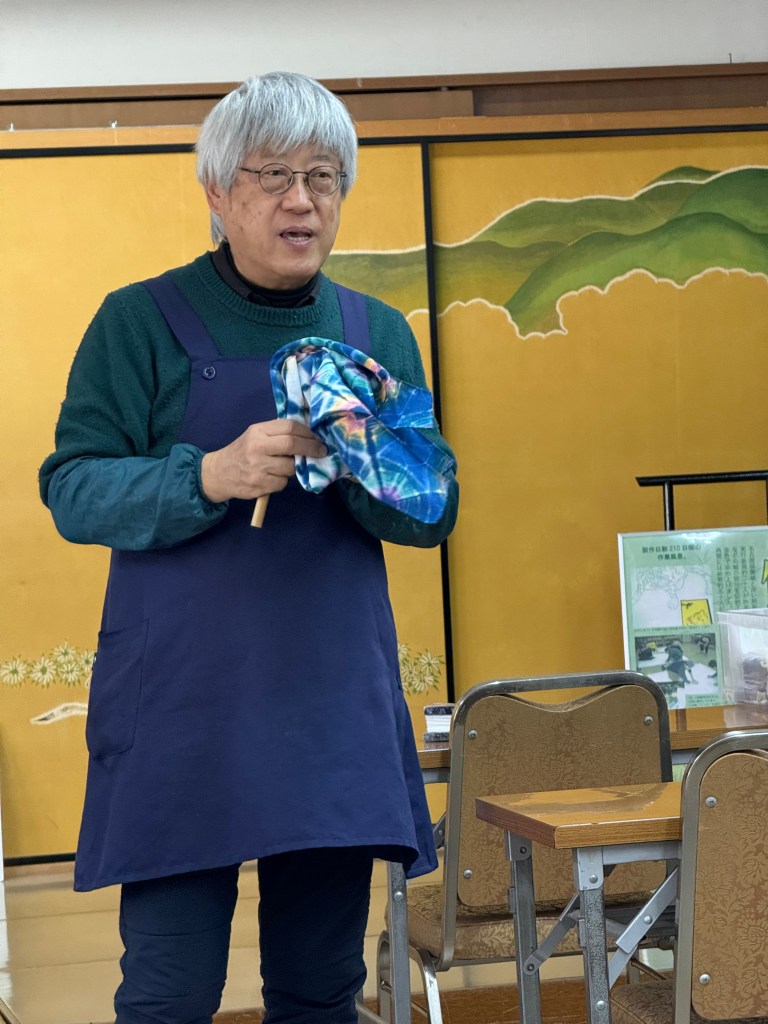
While this was going on, a classroom filled up with people. Our guide asked if I could join and I was excited to find out that I could. I was the only foreigner in the group. Our guide translated much of what he said, so I was able to learn about different methods and designs. We folded our fabric into fourths lengthwise, then folded it like a triangular, much like they fold the American flag. Next it goes between two plastic triangles, then to the basement where the dyes were waiting. Depending on how you dipped your triangle in the dye (and he had various colors) it would come out different ways. I wanted all blue. After you dipped it in the dye for a minute you take it out of the triangle and it is yellow in color. You wash the cloth and it turns blue due to the oxygenation from the air.
This was a dream come true, that I could join in this class. Along with this wonderful class, there were shops selling the most beautiful tie-dyed things, one more beautiful than than the next.

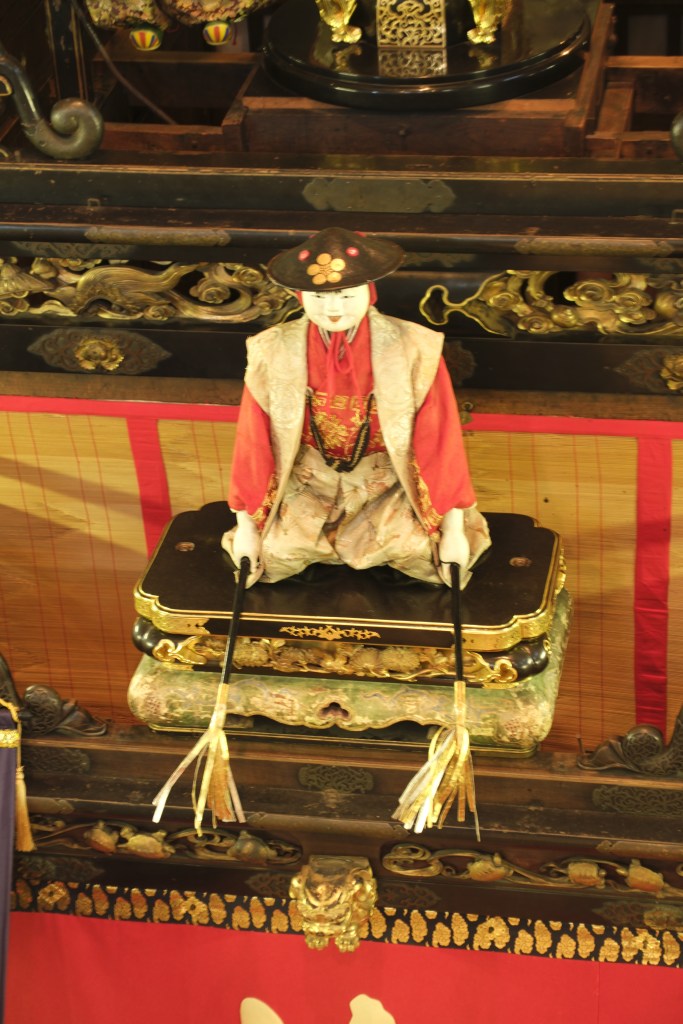
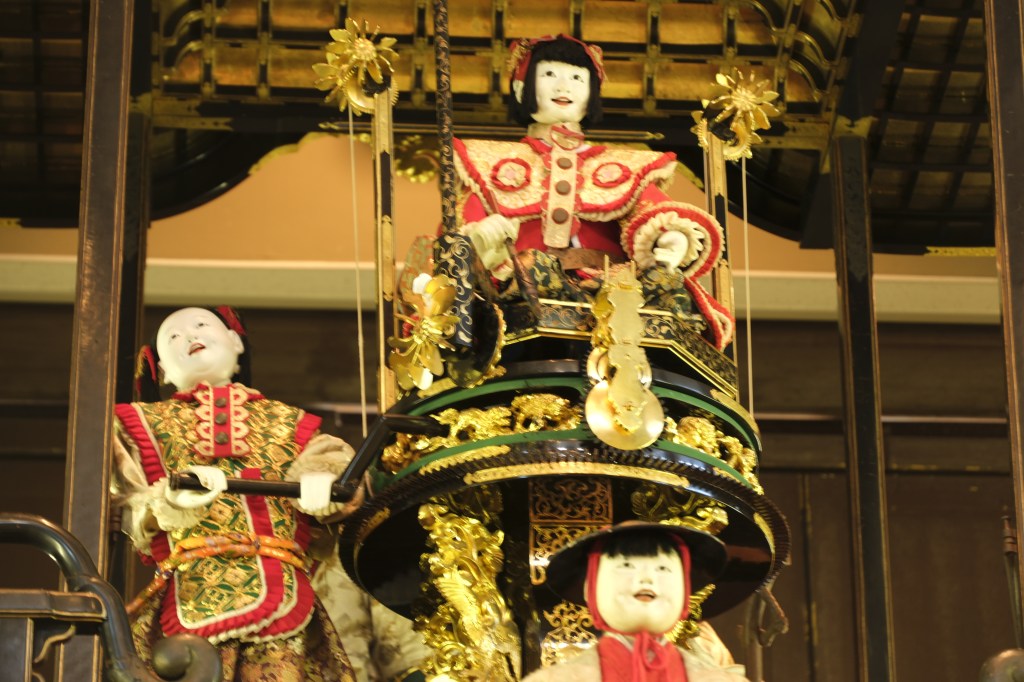
During the festivals in this area, there is a parade with a “float” that was built in the 1800’s that weighs many tons. It is carried by 20 men through the streets. In this district there are three floats, each different. The structure is made of wood beams lashed together with two long beams running lengthwise. The men put the float on their shoulders to carry it. I doubt one could even begin to call this a float. The floats have about three tiers, each getting smaller than the next. The float was covered with red and gold cloth with wooden puppets sticking out, depicting gods and Japanese people on each level. Inside there are 12 puppeteers to work the puppets who must walk at the same time they are moving the bodies and arms. The puppets move back and forth, they move their arms and hands and are quite life like.

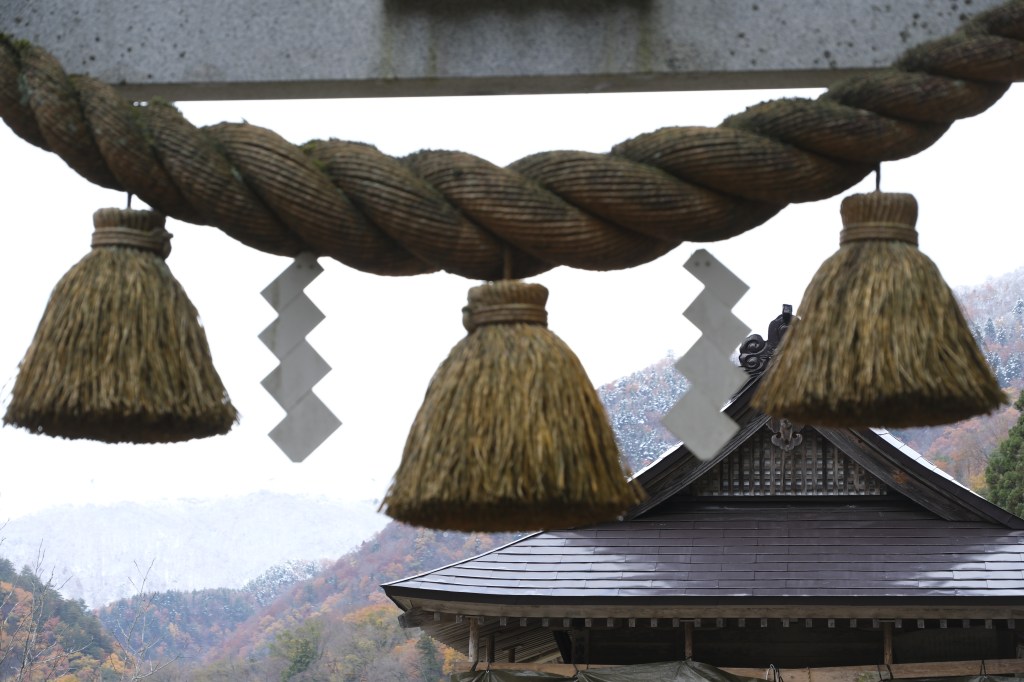
Later in the day, we went to a famous shrine that is suppose to hold the sword of a god who had to fight off demons and monsters with three weapons. One of them was a sword and supposing this sword rests in the Atsuta Jingu shrine. This shrine was founded around 2,000 years ago and enshrines this sword, known at the Kusanagi no Tsurugi sword, one of three sacred treasures of Japan. You cannot see the sword, it is in a box with electric wires around it. People come to the shrine to pray. I think the sword is like Jesus, no one knows what it /he looks like, but they believe in the powers anyway.

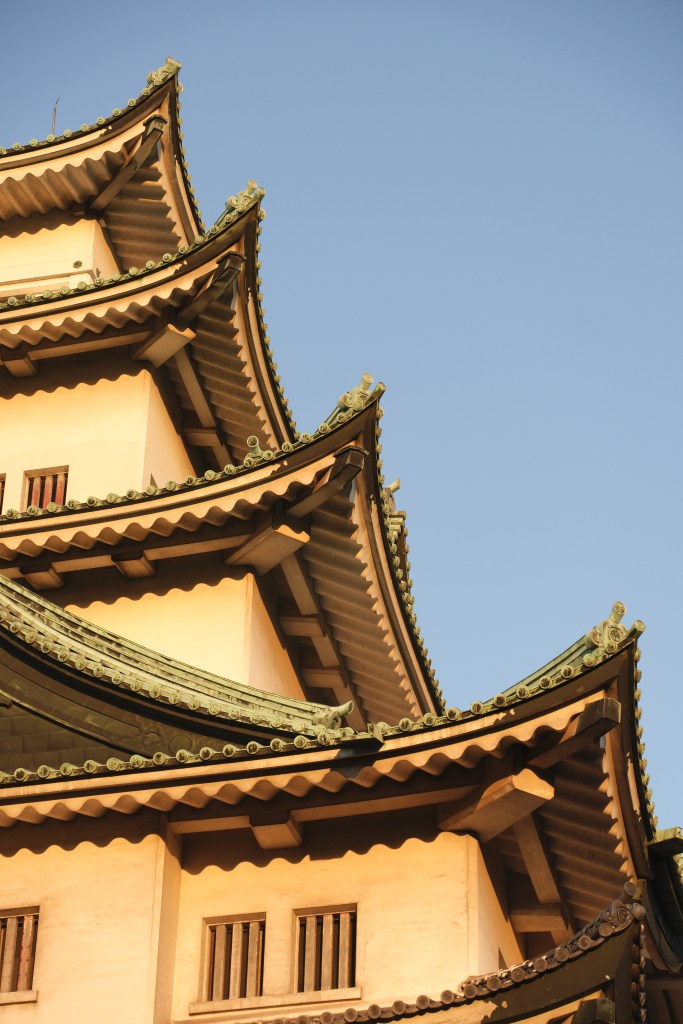
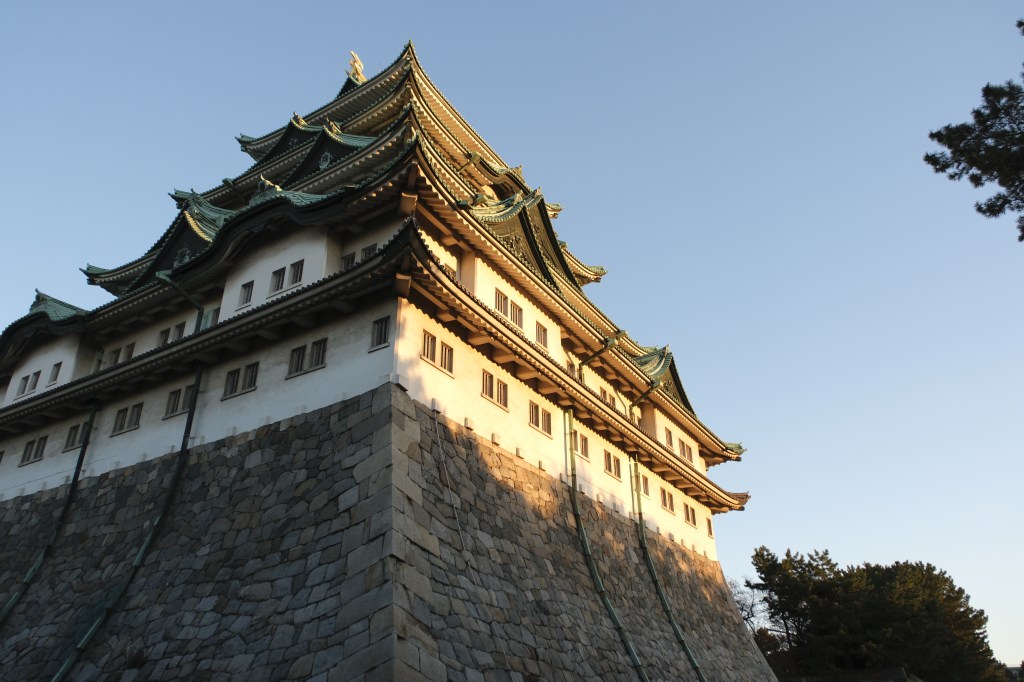
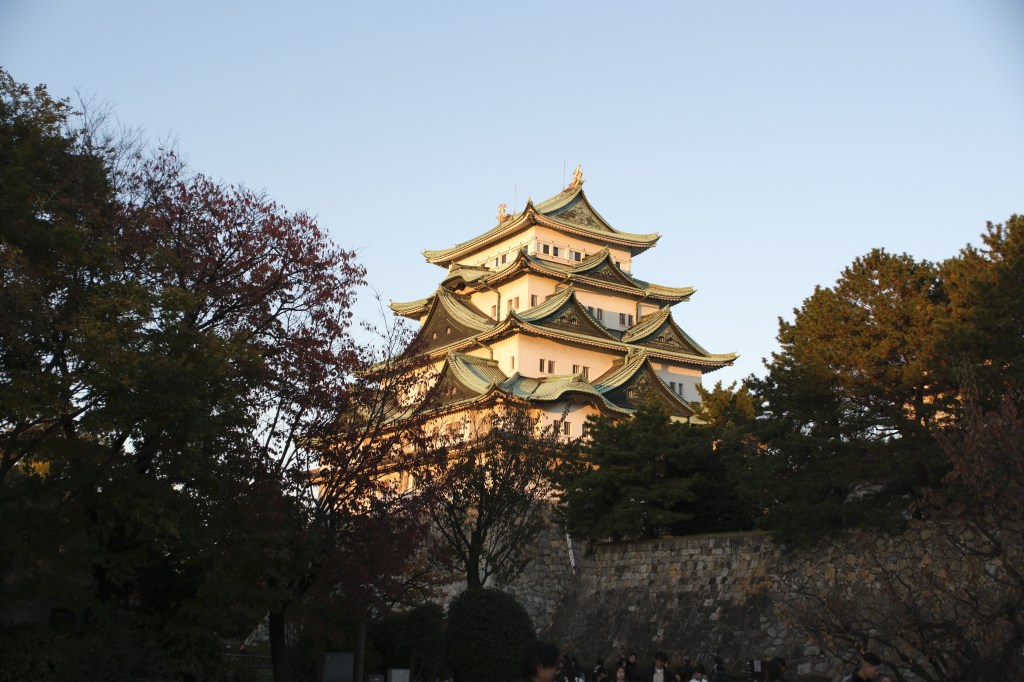
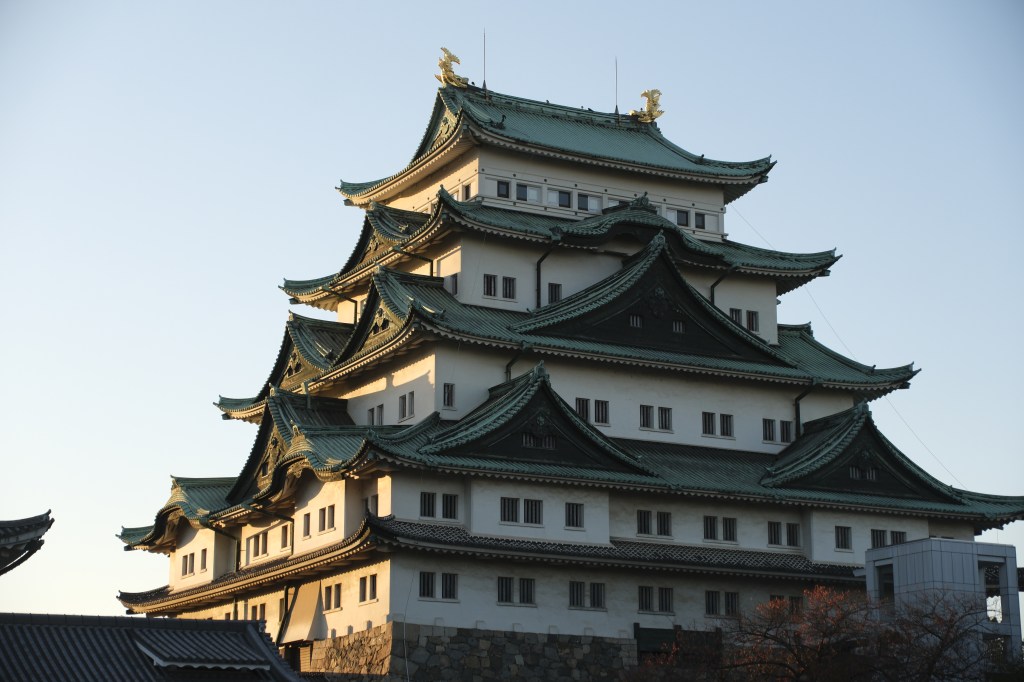
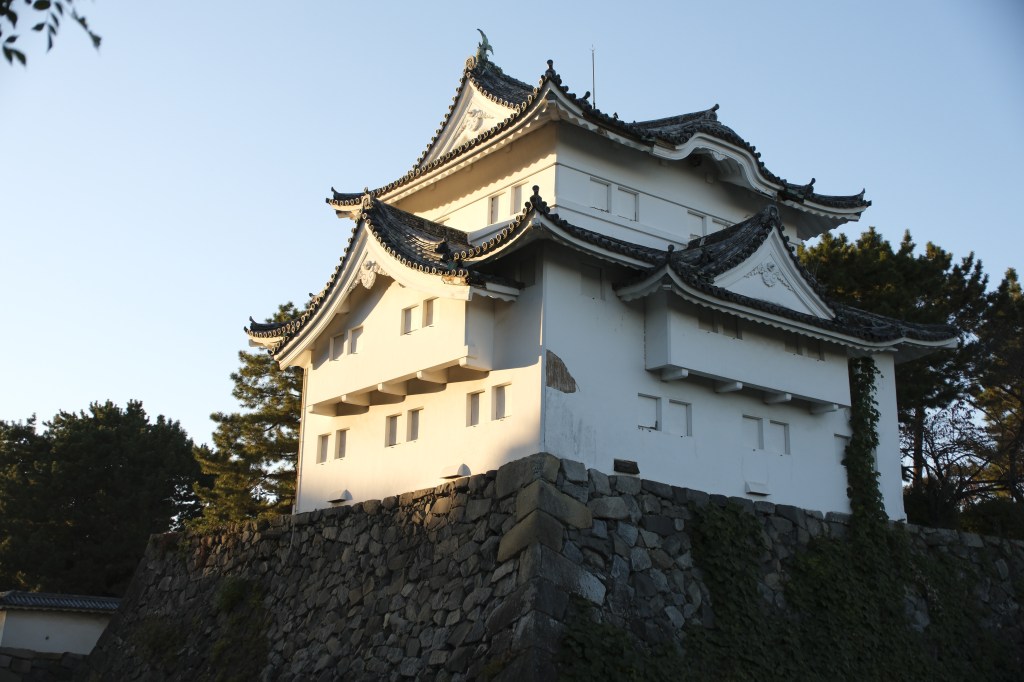
From there we went off to the castle of the Shogun, who 250 years or more, conquered all of Japan after defeating other shoguns. He and his ancestors reigned for 250 year afterwards and united Japan. In the pictures you will see the castle. The tower held the armor, and the weapons, so if there was an attack the soldiers would run up to the top floors to get their weapons. The small windows are for fighting the enemy who were trying to climb up the outside walls. If all else failed, there were small openings at the bottom of the towers where they could throw shit down the walls, making it slippery and of course disgusting. What a way to go, slipping down a wall of shit.

That is about it for the day. Our guide Saki Kelley is married to a man from Illinois, so her english was excellent. We were able to learn a lot and she was great.

November 20

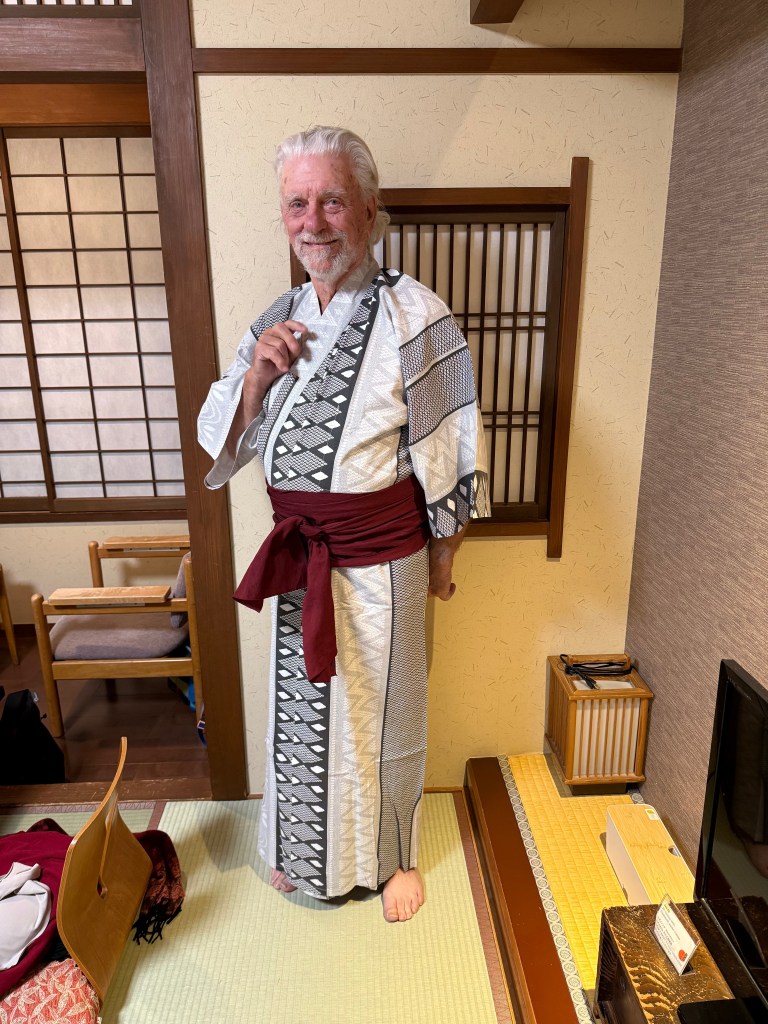
It finally happened, the dreaded Japanese meal. Yep, dinner was included in our stay at this charming typical Japanese inn in Kiso Fukushima. Beautifully appointed and arranged this 6 course meal sat waiting for us. For me this is not my first dinner choice but for Shap it is “never” dinner choice. HIs favorites, raw fish, tofu, raw and steamed vegetables, lots of mushrooms, strange things floating in broth which he was convinced were rubber bands, and finally pickled whatever. I am sure I will be hearing him mummer in his sleep, “Cheeseburger, Cheeseburger.” Despite the three glasses of sparkling water to wash down the slippery fish, he did well. Doesn’t he look happy?

We arrived by train from Kanazawa to Kiso Fukushima which is one of the stops along the Nakasendo Highway. I had read about this highway and decided it should be included in our trip as the hiking seemed reasonable and we were able to stay in a Japanese Inn and experience the bath house after our hike.

The Nakasendo HIghway was an old feudal highway that ran between Kyoto and Toyko.It was built in the 8th century and it helped to unite the state around the old capital Nara. There are 69 stops along the way and 11 of them are in the Kiso region. Our walk up the paths, past shrines,and graveyards into a forest of cedars that conjured up pictures of people “forest bathing.” The only bathing I accomplished was sweating going up hill, way above the village.

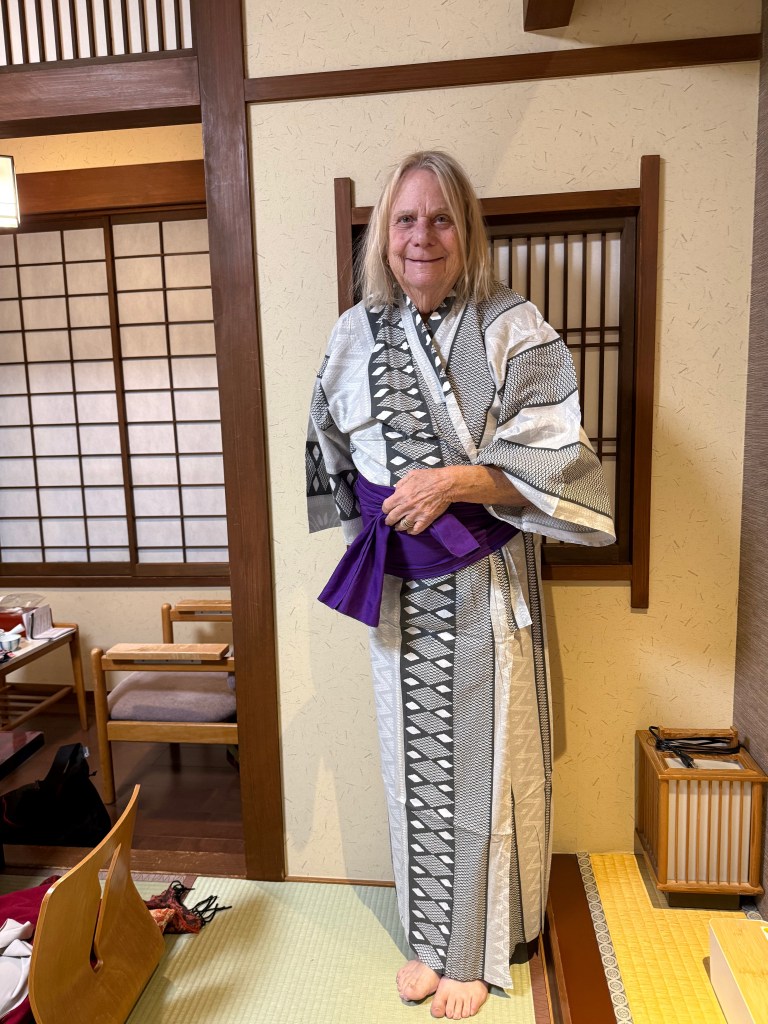
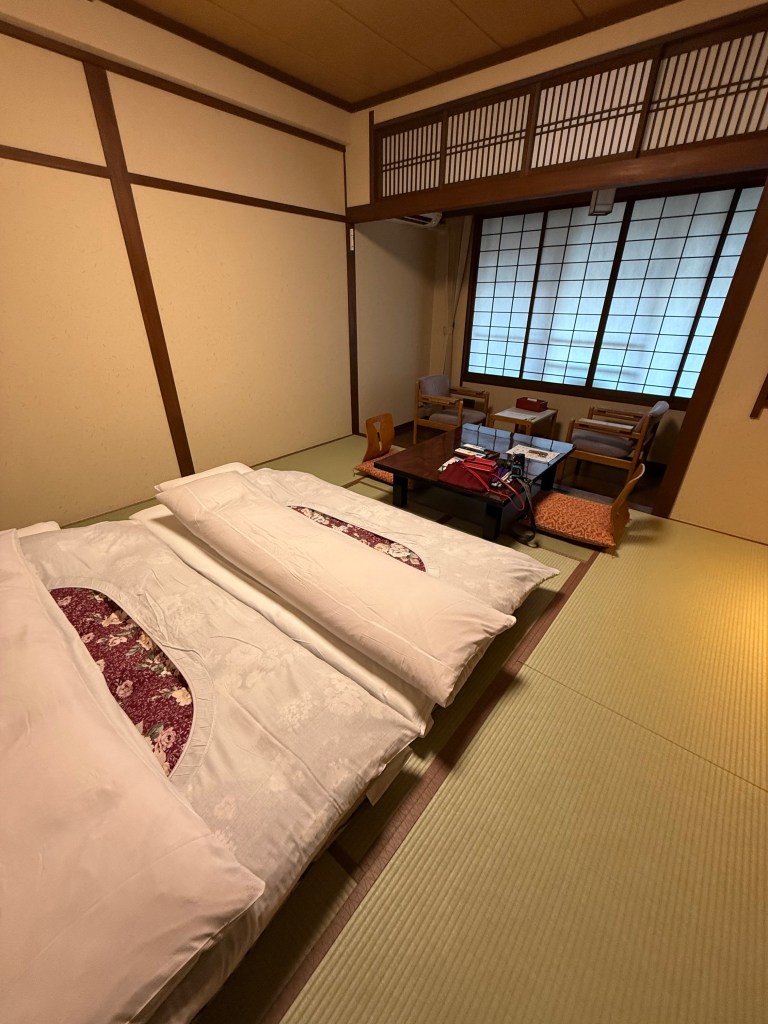
Check in time at our inn was 3:00, but 3:00 found us overlooking the village with a steep decent. Arrival at the inn was easy and quick. We soon found ourselves in our quaint room with the beds on the floor and kimonos waiting for us to wear to the bath house and even dinner. The bath house was delightful with two baths one indoors and one outdoors, separated into men and women sides. Small stools lined the walls with faucets and hand held showers, a bucket if you wanted it to wash your face, and various soaps and shampoos. After scrubbing down, I spent time in both baths and talked to some women who were walking the trail for several days. Relaxed and VERY clean I was happy we opted for this side track adventure. Back to the real world tomorrow.

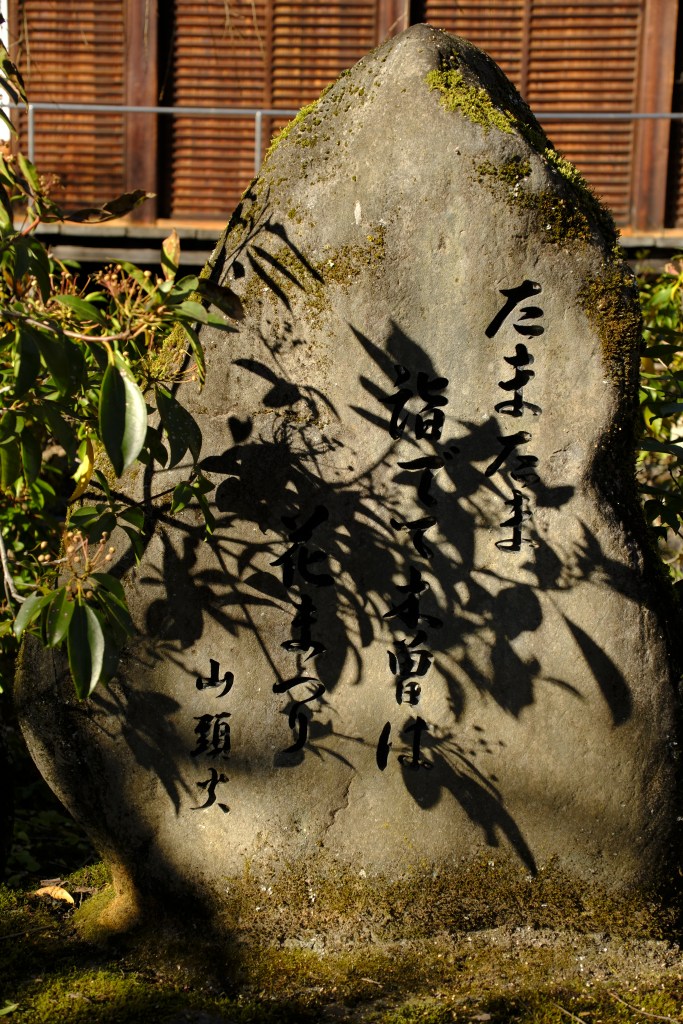
Some scenes around the area.

November 19

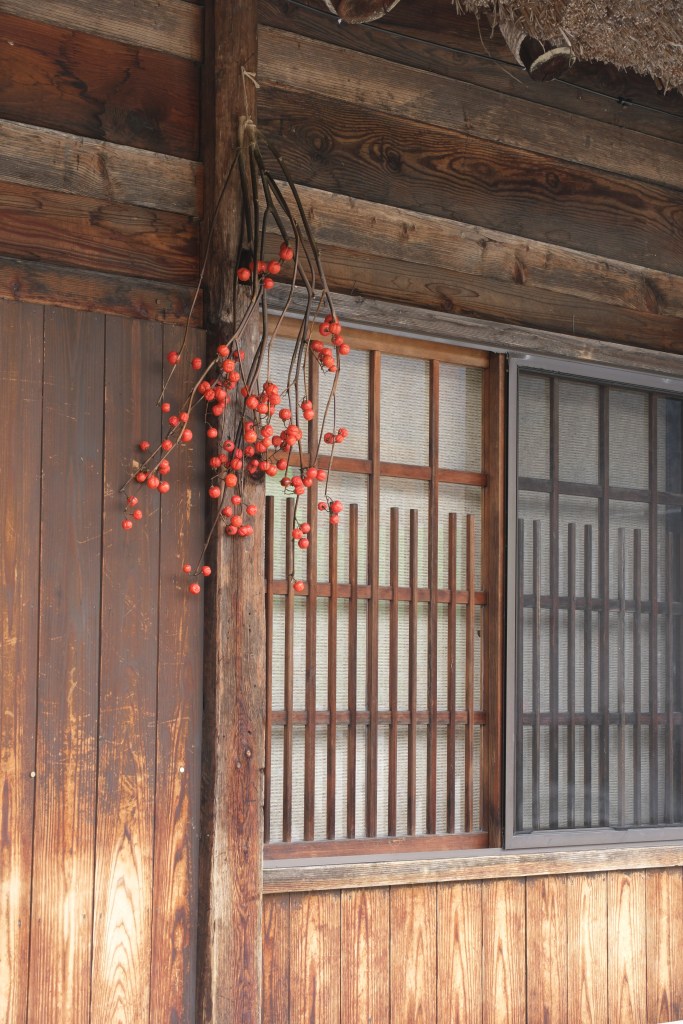
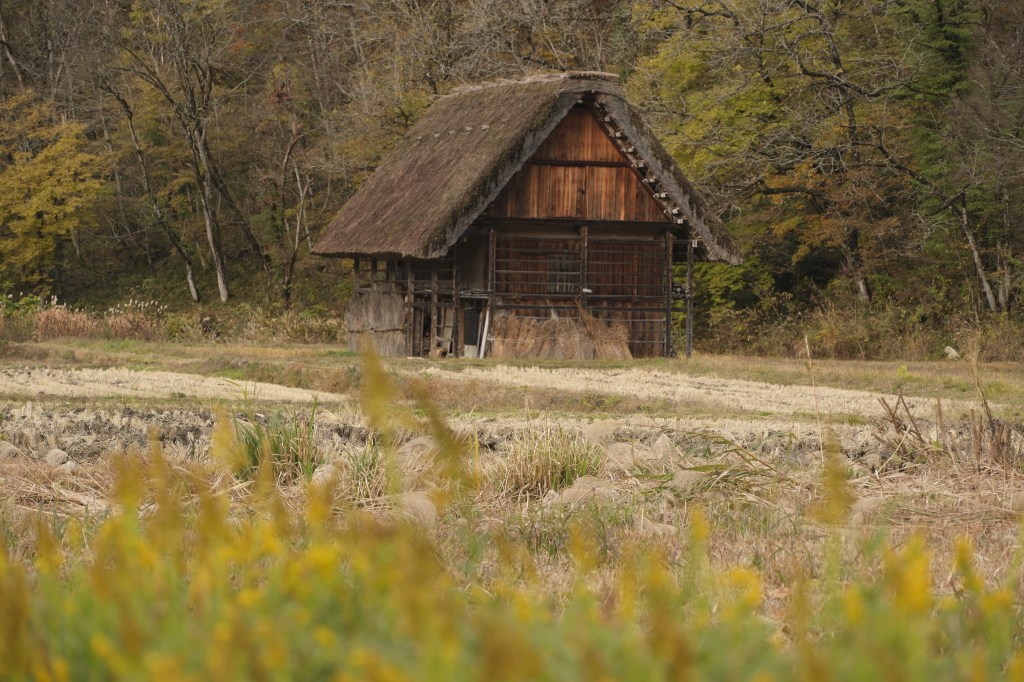
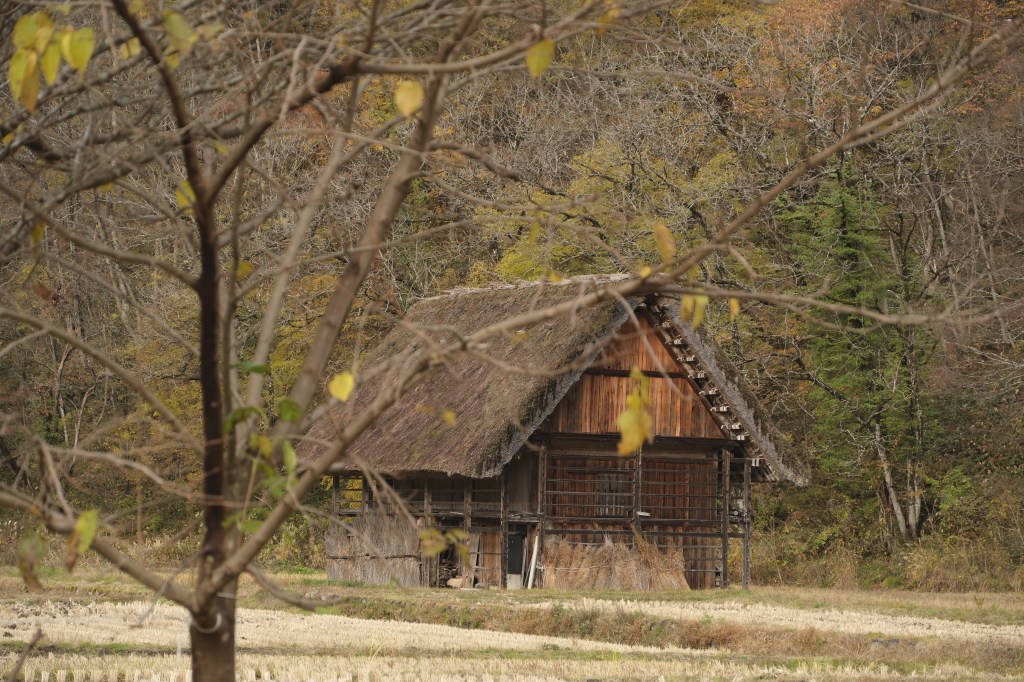
No rain in the forecast today. Not trusting the report, we packed up our backpacks, the cameras, extra layers of clothes and our borrowed umbrellas to set out to the village of Shirakawa-go, a UNESCO World Heritage site. About an hour away by bus sits this Japanese alpine village. It is renowned for its steep, thatched roofed farmhouses designed to withstand heavy snowfalls.This is known as the Gassho style of architecture translating to “two hands joined in prayer.”

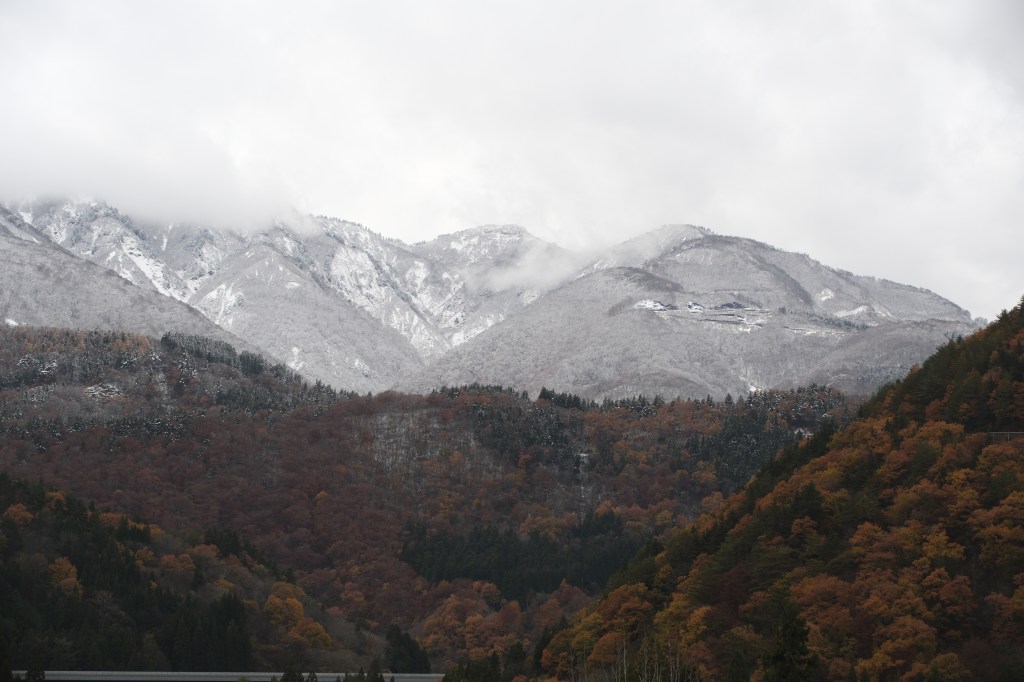
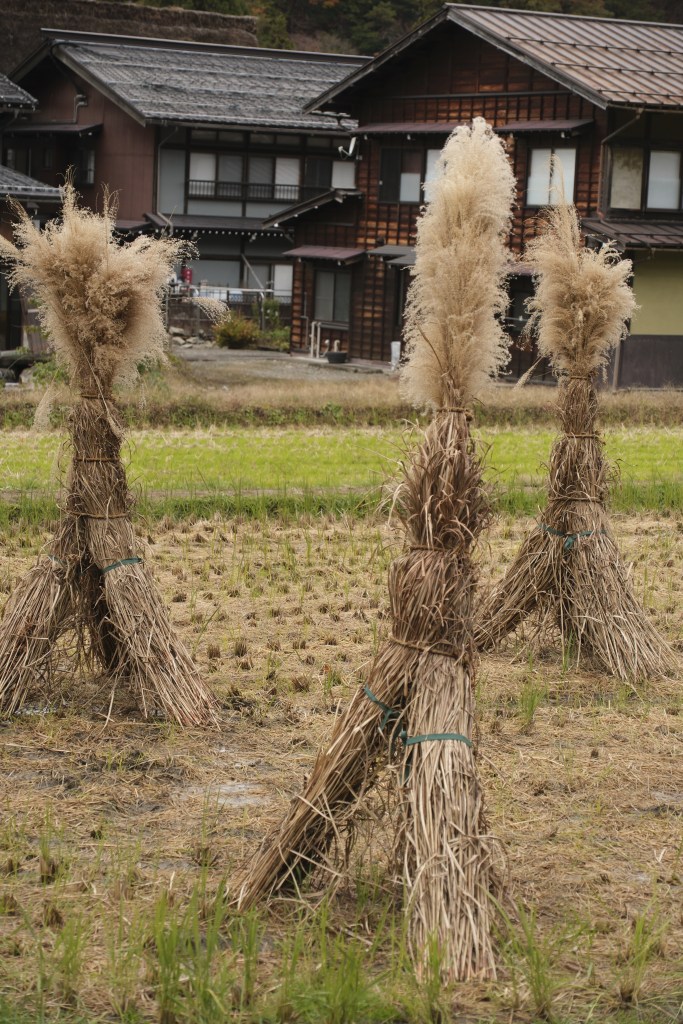
Historically isolated this village, incorporated in the 1800’s, shows evidence of the existence of people as far back as the 1600’s. The high mountains were covered with snow creating an backdrop of white against vivd red and yellow maples. The last of the plums, roses, and rice dotted the fields while thatch tents tied together stood as a sentry guarding the fields. Photographically this was an opportunity to create something beautiful. Except the tourists picked the most picturesque sites in the village to spend 10 minutes taking “friends” pictures of each other while posing with the peace symbol shading half their face or in the most ridiculous poses. Patience I do not have for such antics, waiting ten minutes to get that perfect shot was painful.

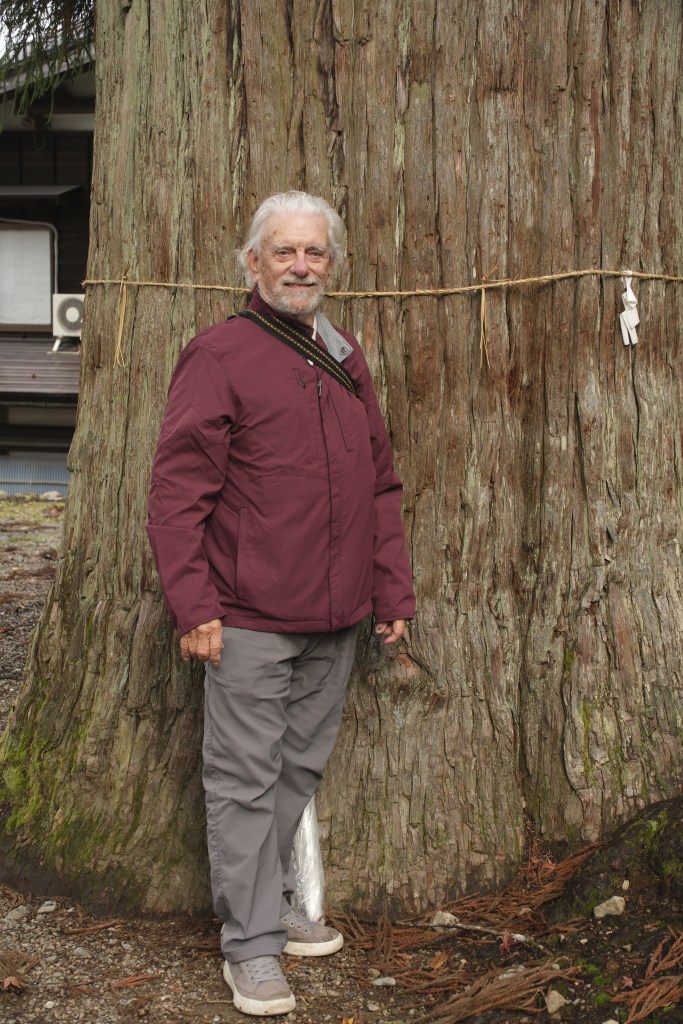
I believe now Shap and I have gone “forest bathing.” We kept our clothes on and did not have towels with us. But we did walk amongst the most magnificent cedars with trunks so wide we could not join hands around the tree. The path led us higher up from the village with a water way running beside us. Although, quiet contemplation is not my style, and communing with nature means either walking the dog or taking pictures, I did enjoy the solitude and beauty of this cedar forest.

By the time we left, the sun had faded and we were glad to have a warm bus in which to journey back to Kanasawa and an early dinner of tiny fried shrimp and tempura. There are the lots of small restaurants close to our hotel that serve excellent food. Eating in these restaurants is an experience all its own. Tiny hole in the wall places barely large enough to have a counter, dish up excellent beef. However, along with the beef someone will be sitting close by eating weird, I believe, almost live octopus, or soup with strange shapes floating in broth that belong to parts of bodies you would never think of eating. All of this coming from a kitchen the size of the front seat of a car. What fun!

November 18

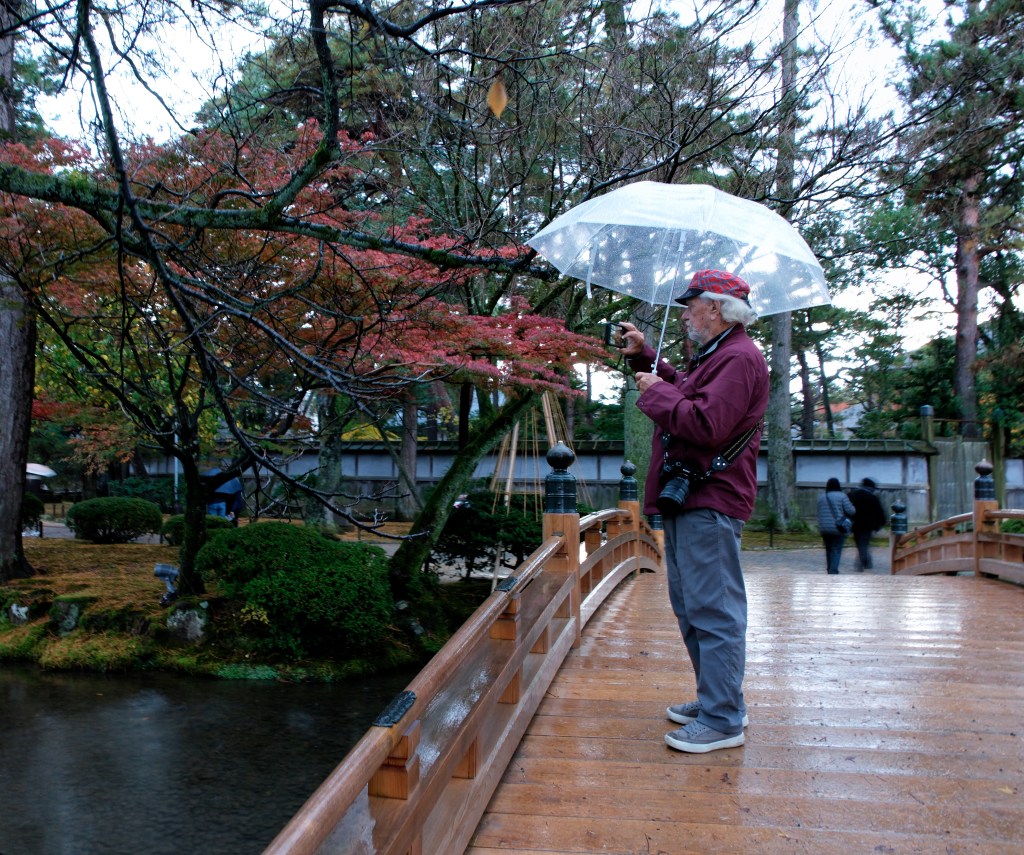
Rain, 100% rain, who knew that Kanazawa was known for rain. Our guide told us the saying goes,”You can forget your lunch, but don’t forget your umbrella.” The hotel lent us see through umbrellas, I have never been so glad to have one that came down past my shoulders. Torrential downpours as we walked through the streets of the Geisha section of Kanazawa. This is also know as one of the best places to see artisans work. Our guide spoke excellent English having worked as an ambassador to the Empress. She seemed delighted to be leading us down the narrow streets in the pouring rain, pointing out different houses from different eras. As if there was not enough water on the streets already, they have these small round steel circles squirting water out of them. They were like small springing fountains squirting water out the sides creating just enough water to make sure the tops of your shoes throughly soaked. I was told they were testing these to make sure they worked for the winter snow. Because the ground water is a warmer temperature than the outside, it melts the snow. I wonder what it would be like to have these in Stowe. Somehow I can’t see it working, just creating a skating rink on our sidewalks.

Despite the fact it was raining, we managed to enjoy the area. She assured us we were good and early because soon the tourists would be coming despite the rain and we would not be able to take pictures. This is a busy tourist season. Sure enough, by 10:00 the buses had arrived and people were roaming the streets fighting for room for their umbrellas. We were on our way out of the area at this time to go to an artist who painted designs for kimonos on silk.

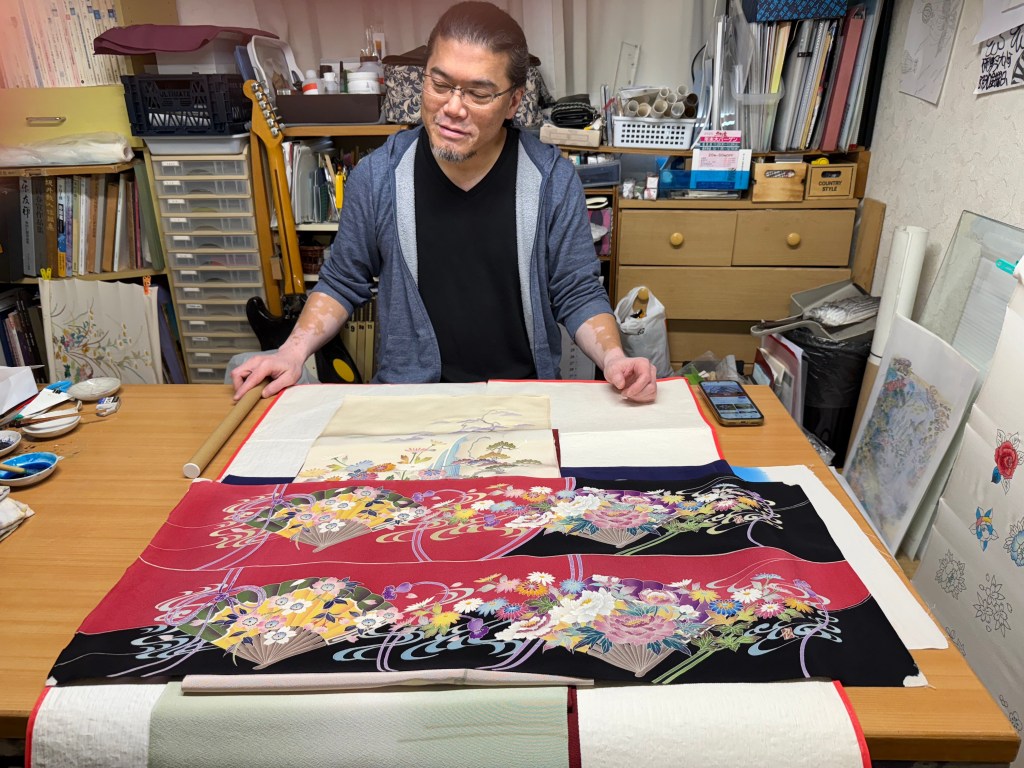
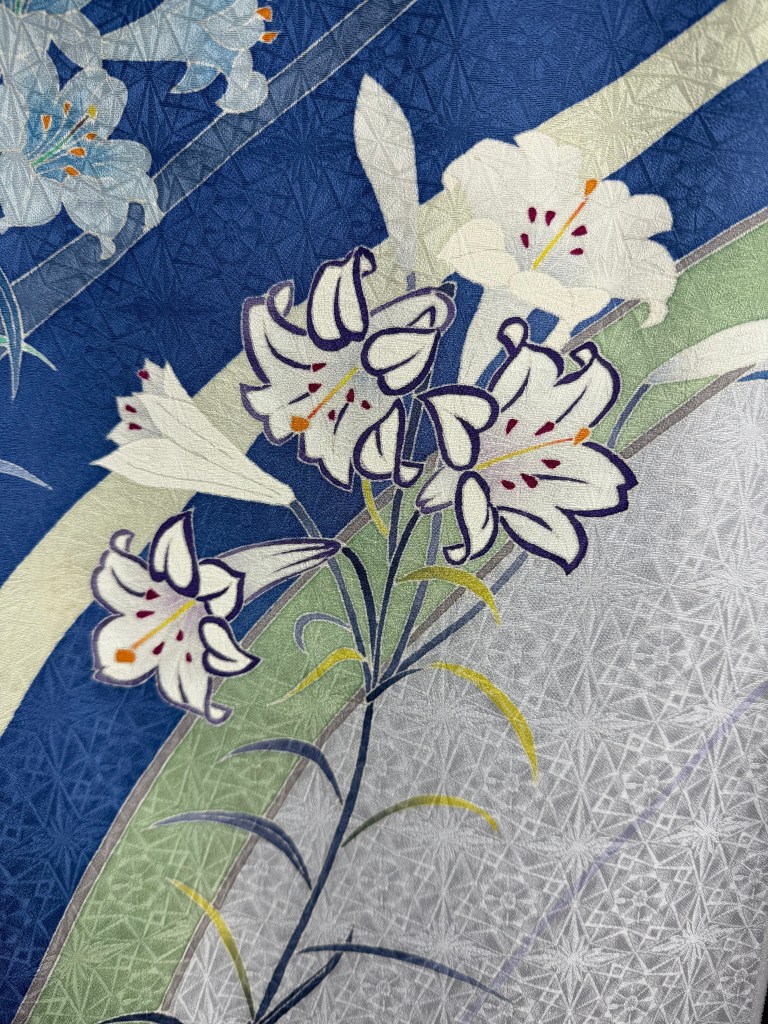
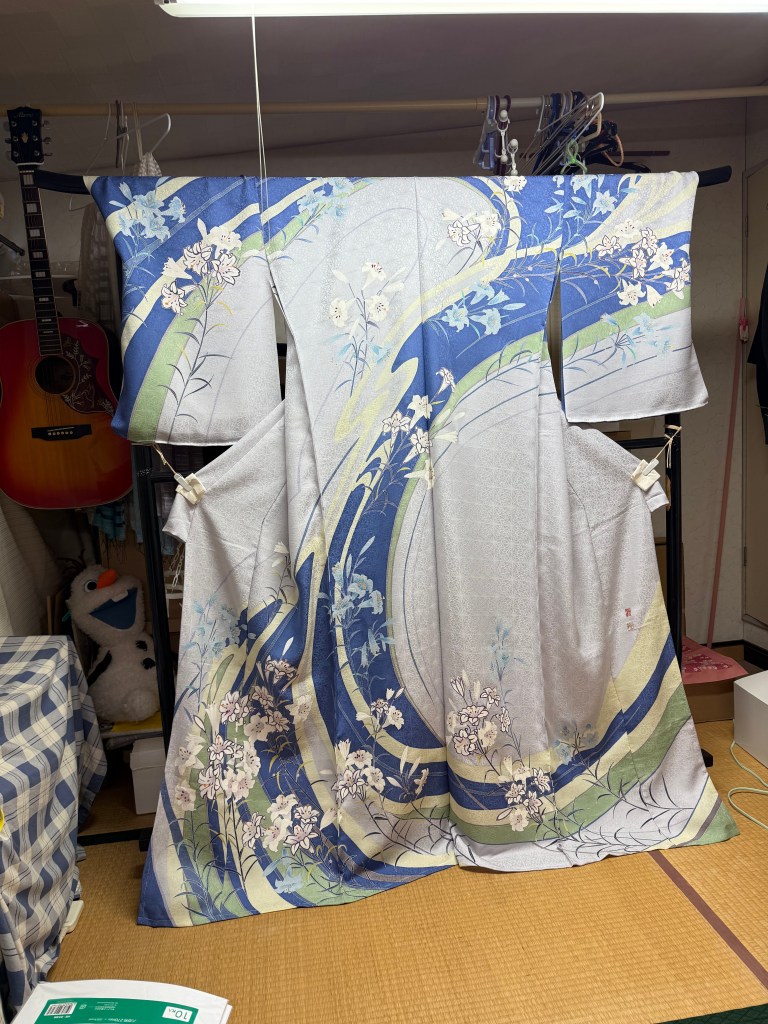
Up a narrow staircase in the artists house, we opened a door to his studio to see the most magnificent kimono hanging on the wall. He greeted us and began to explain how he painted the silk. First he drew ideas as a concept, then folded paper in a kimono shape and created the design on the small paper kimono. Once he had approval from his client, he drew the design on a life size paper kimono making sure that each design would fit with each panel of the kimono. Then he began to draw with a paste on the silk. The paper design is below him and he has a light which allows the silk to be transparent so he can see his design below. He begins painting using commercial dyes, holding the brush straight up. He is able to paint without the paint running into the next part of the design because the paste prevents the ink from running. Both Shap and I tried our hand at it. It is tedious and if I sat on the bench he sat with his legs folded I am sure I would not be able to unwind myself at the end of the day. He says he works 12 hours a day. Oh think of the cramps.

Once the design is done, it needs to be steamed to set the dye. From there it goes through another process of covering the whole design with the paste he used in the beginning, then shaking wood dust over it and steaming it again. After that it gets washed and the wood dust and paste go away. The water that washes the cloth must be running otherwise it will cause the dyes to run. Not sure I got that concept.

It must dry on a rack where no part of the silk touches the other part to prevent dye from getting where it should not be. It then goes to the tailor who fits the dress to the person. The designs must line up with each other. The kimono is one size for all. You make it fit by rolling it up to the right length and tying it. Hence, the reason for the sash.

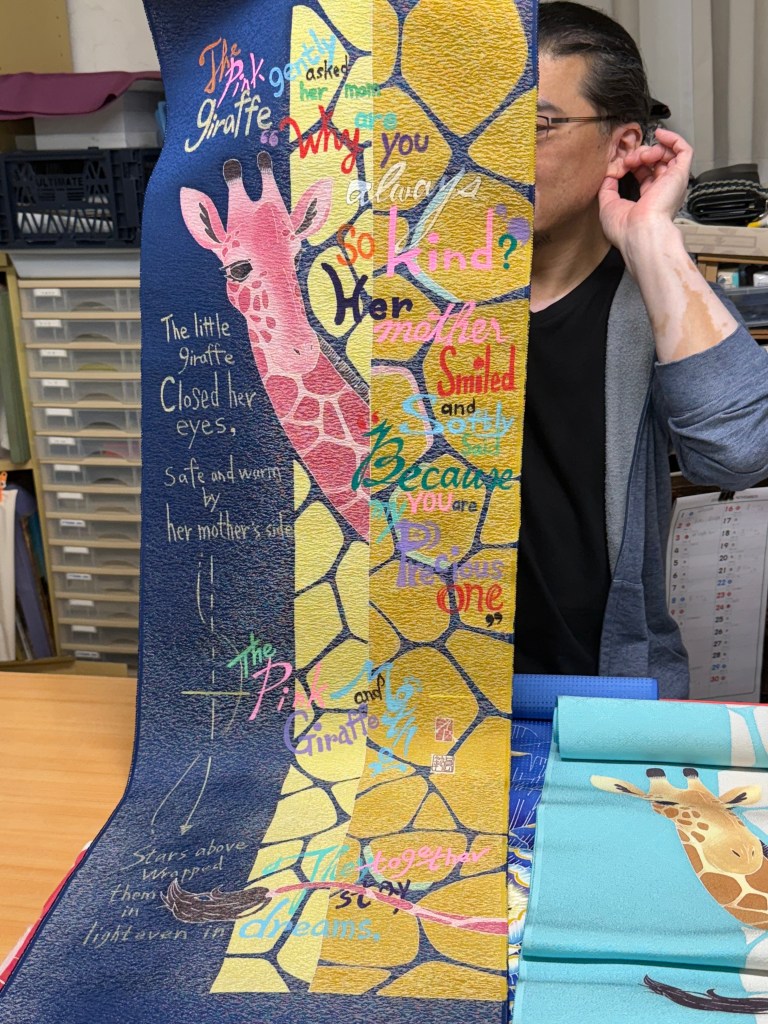
The artist showed us many designs of various sashes he has made and his award winning ones, such as the giraffe below. For each kimono, women like to have three sashes. It takes about one hour to dress in a kimono. It also takes about one year from design to finish to make a kimono.

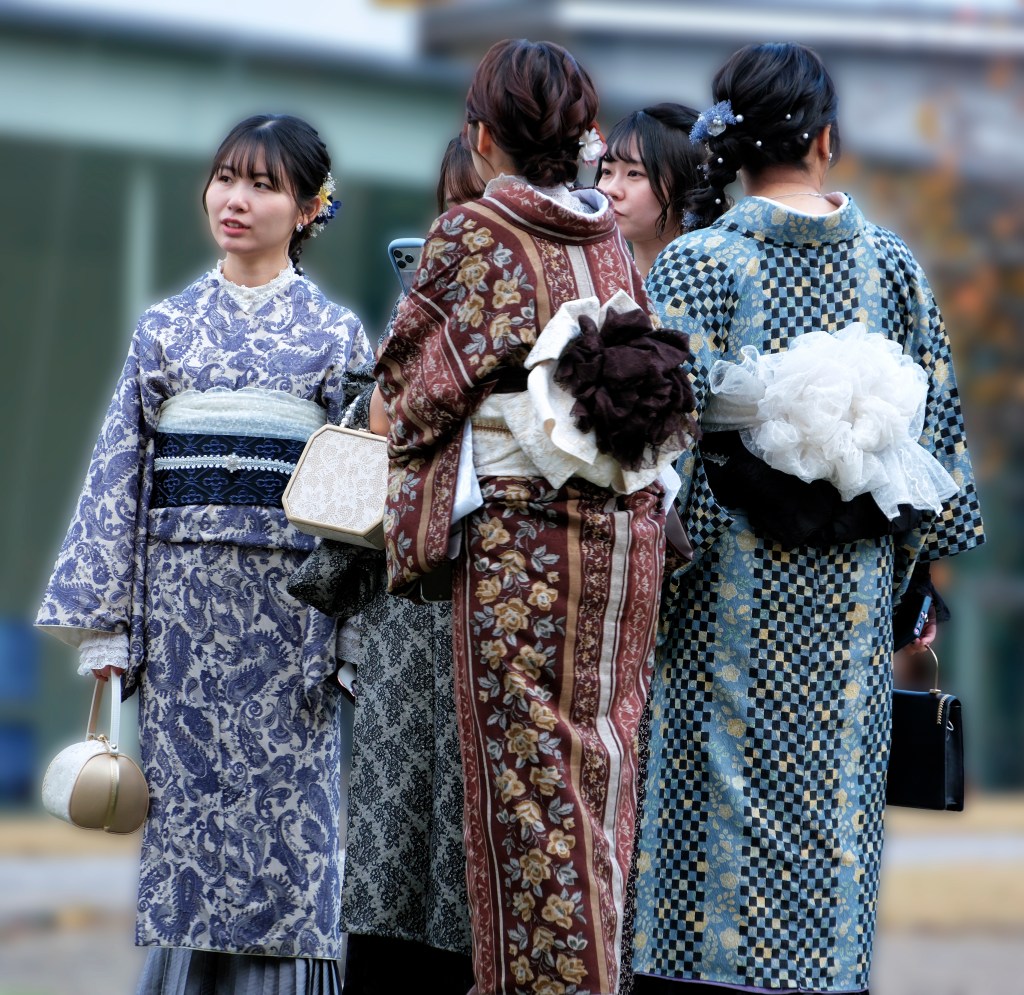
The kimonos of Kyoto were very different as they were woven instead of painted. These kimonos were worn by the royalty of the Emperor. The kimonos of Kanazawa were for the Samurai women. These were painted and not as flashy as the woven kimonos. Although I was never intrigued by kimonos I have come to see them in a new light. They are truly works of art and to be treasured.

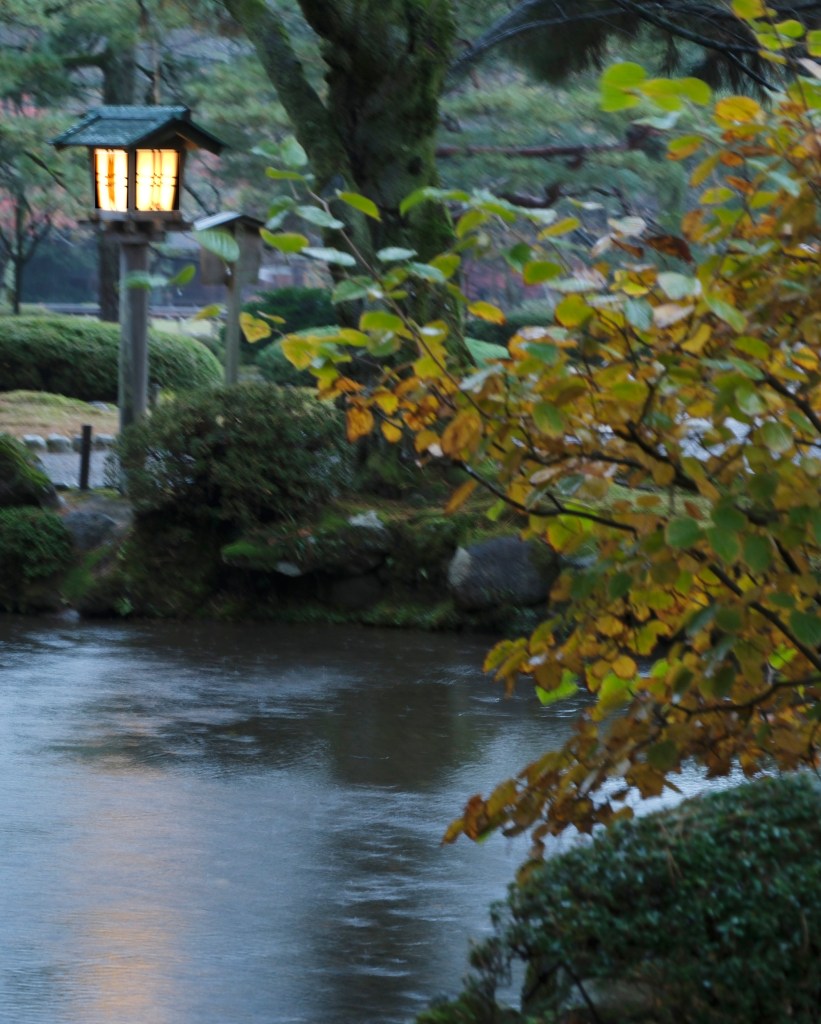
Below you can see some of his work and scenes from today in the rain.

November 17

We are off, out on our own, now we have to rely on how savvy we are at negotiating the trains, taxis etc. Equipped with train tickets, reserved seats, and times we had to be at the train. We set out. Our first leg was from Kyoto to Tsuruga on the fast train. This went without drama. Next was a “local” from Tsuruga to Takefu, which meant a transfer and ten minutes to find the right track. The signs were easy to follow and with little anxiety we found the train waiting. What we did not find was a place to buy tickets for that train. With our history of getting arrested on trains, being thrown off a train in Berlin for not having a ticket this was somewhat of a possible issue. Not one to be late for anything, having had it drummed into my head for my entire childhood, I opted for two choices. One, buy the ticket on the train; two, get thrown off at a station, find a ticket booth and get on the next train. Meanwhile, we had a 2:30 appointment with a potter somewhere in the mountains of the area around Takefu.

I opted for number two, Shap kept saying shouldn’t we find a place to buy a ticket, I said we did not have time and so we stayed on the train and it left. No one came to throw us off and when we arrived in Takefu we were able to buy a ticket so we could get out of the station and at the same time buy a return ticket to the next destination,Kanazaaw, later that day.

So far the trip was going according to our schedule UNTIL we went to get in the taxi. All our destinations are in English, a good thing for us but not for our taxi driver. We might as well have asked him to drive us to the moon, he had not the faintest idea where we wanted to go. Lots of conversation back and forth, he in Japanese and we in English. Google maps did us know good and I realized Google translate was not going to help. Taxi driver number two comes up, I breathe a sign of relief because our driver was about our age and I am not sure he was completely with it. Number two cannot figure out where we are to go.

Ok, now it is time to resort to sign language so I begin to show myself working on a wheel and saying “Ceramic.” The light bulb goes off for Number 2 and he instructs Number 1 on where he thinks we are going. We pile in Number 1 cab and drive 200 feet and he parks. Turns out we have to buy a taxi card and the women who sold it to us spoke English and knew where we wanted to go. Off we went into the mountains.

Arriving at Echizen Ware Industrial Cooperative there is not a car in sight, it looked like the rapture had happened and no one was left. Our driver had no idea where we were to meet, the map gave us no help and the phone number we called left the drive confused in Japanese and me confused in English. Something about texting me a picture, which I knew was never going to come through as my phone was not receiving or accepting calls within Japan. There was a round building that looked promising so went there, all closed up except one door. The driver and I went in and found one lonely person working. Once again a phone call and this time we struck gold, he knew where to tell the driver to go.

We arrive at a pottery store and no one knows what we are doing there. Another phone call and finally we are told someone is coming to meet us. Our taxi cab driver was happy to dump us and promised to be back at 4:30. While we waited we looked at the most beautiful pottery from this region, Echizen. I asked if they shipped and they said, “Very sorry, not to the U.S. anymore. Trump not good, tariffs.” We understood that immediately. Everyone showed very sad faces and agreed no one liked him. This is the second time we have run into this in 5 days.

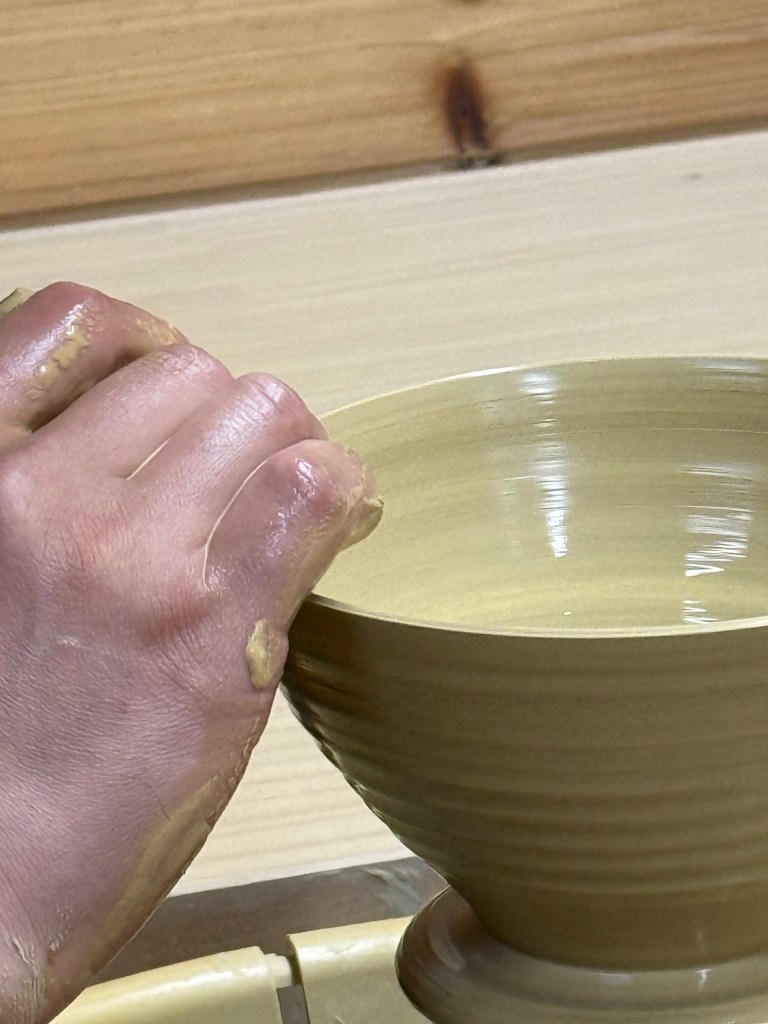
Taka, our guide finally arrived, gave us the history of the area and the style of Echizen pottery which is very simple. Originally it was made only for utilitarian uses. It was very thick and plain. In the 12 th century the artisans began making more delicate pieces with decoration and glazes. This is because the seat of power was Kyoto with wealthy people wanting upscale items. This area was close to Kyoto. We walked around the area and looked at the large sculptures and then went off to meet the potters.

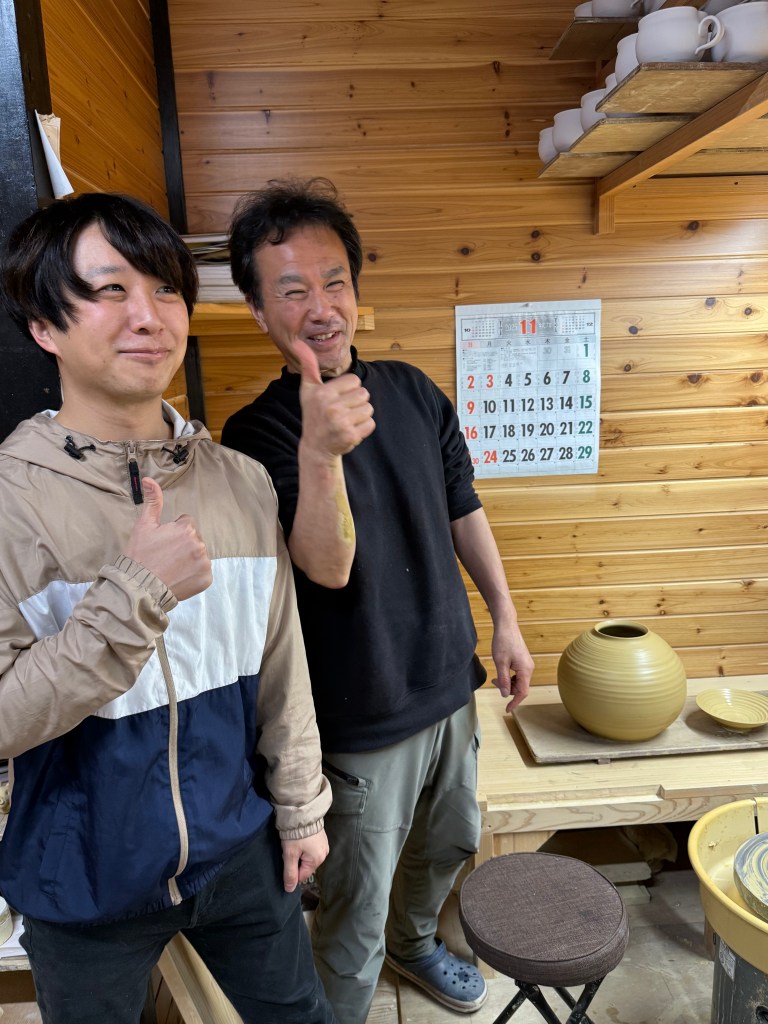
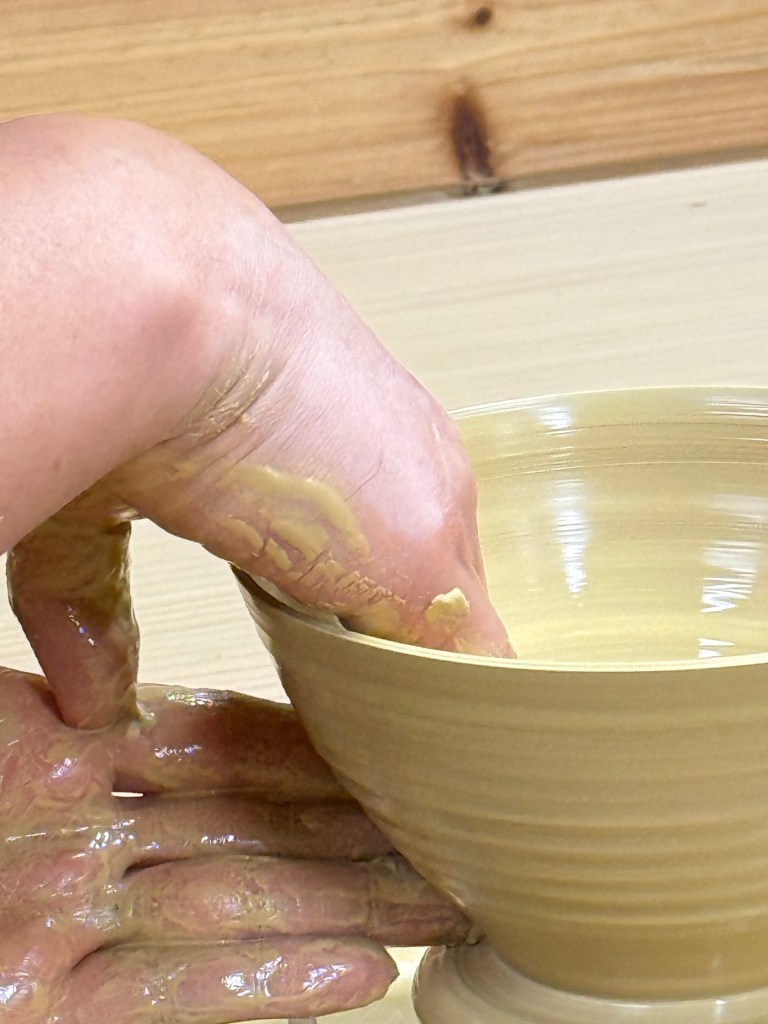
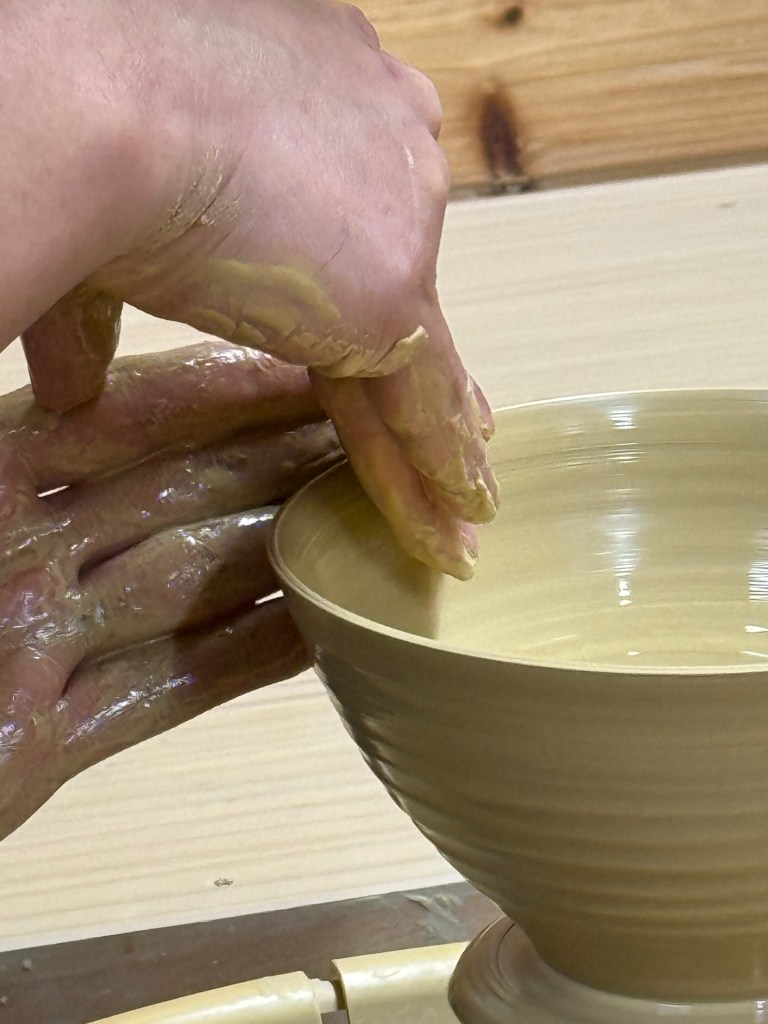
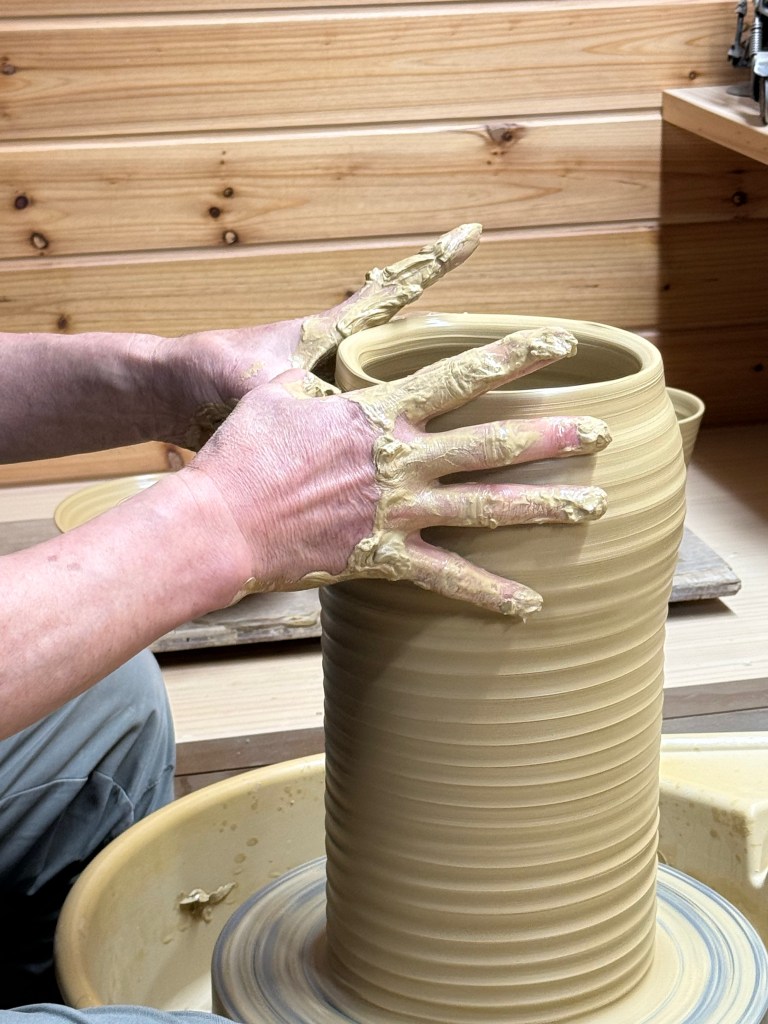
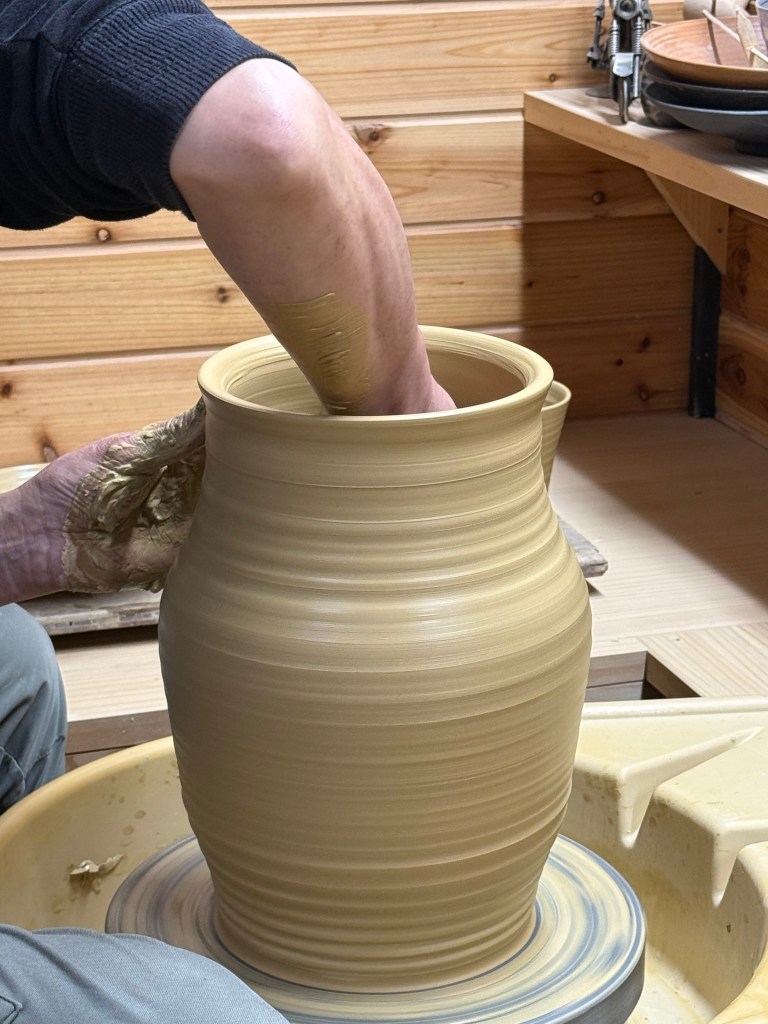
What a highlight, we met a father and son team who were very friendly. The father had a twinkle in his eye and was very engaging. The son said he did not learn from his father, but went to art school. The building where they had their studio was built by the grandfather and was a work of art itself. I wedged the clay, but did not make anything, only watched as they worked. We admired their work and asked about several pieces. I said I could not buy anything and I was sorry. Again we heard complaints of the tariffs and he showed us three shelves of clay pieces that were ordered from New York and the order was cancelled. So it seems the tariffs are not only hurting, us but small business people as these two.

We left and met a new taxi driver. We figured the other one quit after his experience earlier in the day. Arrived at the train station and without any mishaps we arrived in Kanazawa. Tomorrow a tour of the more artisans.

November 15

Actually it is Sunday November 16th, but I was beyond exhausted last night so here I am at 9:30 AM writing yesterday’s blog. We have already been up since 6 AM to get to the bamboo forest before the crowds. More on that later.

Hana, our guide greeted us at 9 AM and off we went to the first of two sights of cultural importance. Our first stop , Nijo Castle, was built to protect the power and wealth of the Shogun. This was the beginning of the Tokugawa Shogunate in 1603 and its end in 1867, when the last shogun, Tokugawa Yoshinobu, returned political power to the Emperor within the castle’s Ninomaru Palace. What I did not understand was the difference between the Emperor and the Shogunate. I thought he Emperor held all the power and the Shogun was the military wing under the direction of the Emperor. It was the opposite. In 1603 the Shogun became the power and they kept the Emperor as a figure head as many people felt the Emperor was a god. Because the Emperor at that time lived in Kyoto and the Shogun lived in Tokyo, it was important for the Shogun to have a residence in Kyoto when he visited the Emperor. Today the Emperor has the power.

The palace was very interesting architecturally, as it was built with a series of box like structures placed on a diagonal in order to bring sunlight into all of the rooms, as there was not electricity when the palace was built. As we walked the floors squeaked. These were the famous “Nightingale Floors.” The squeak was put in the floors so no one could advance into the residence without notice. I would have had Shap fix the floor.

There were many waiting rooms with beautiful decorations of tigers, trees, flowers, etc. It seems you might have to wait for days to see the Shogun, advancing from one room to the next. They did have a senior citizens room, but it did not look anymore comfortable. What happened if you were old and creaky and could not sit long? No women were allowed to see the Shogun, so at least I would not have had to bring my knitting and lunch.

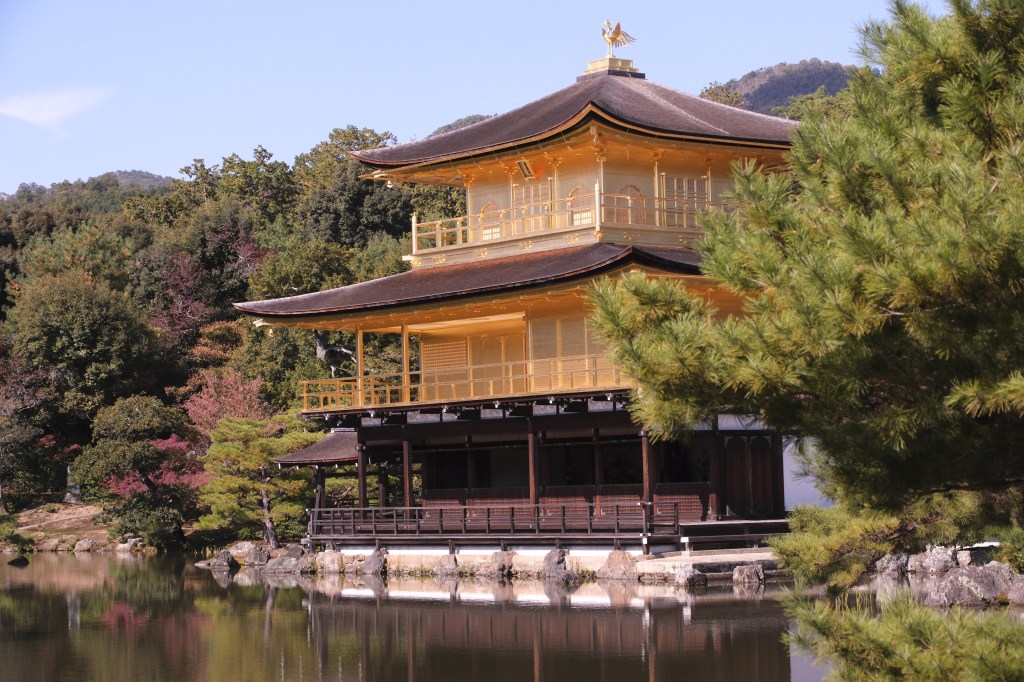
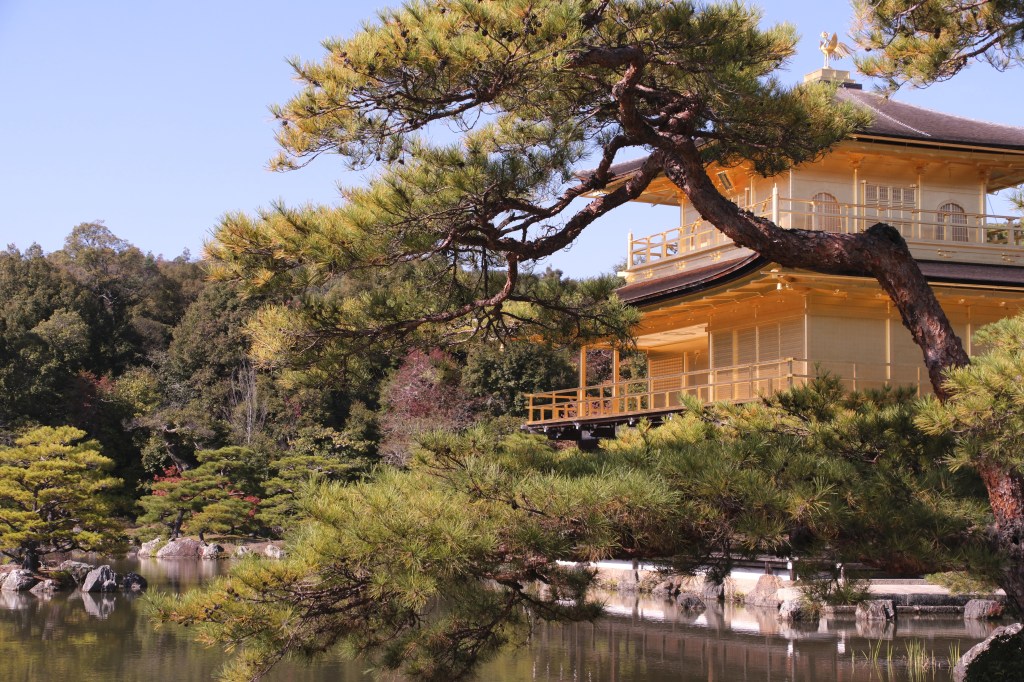
On to the Kinkaku-ji Temple known as the Golden Stupa. It was built in 1397 and was a residence until the Shogun died and gave it as a temple. It was beautifully situated in the center of a pond with islands of trees surrounding it. The entire building represents 3 architectural styles on three levels, and is painted with entirely in gold. An amazing site. Here I bought talisman or prayers for friends who are sick, for good health, for dreams to come true and said a prayer to send to the universe for all my friends who are sick or recovering from surgery or illness.

Hana then took us on a 30 minute bus ride to the Gion section where many of the geisha’s perform, train, and live and the most famous temple,Kennin-ji Temple, is located. Taking the bus reminds me of the circus cars where many clowns would explode from the car. As you get on (only by the back door) there are already too many people crowded together for anyone to fit in, but fit in you do. You are now standing inch to inch when the bus stops and someone from the very back has to try to make their way to the front of the bus weaving and pushing people aside.Why not go out the back door you ask? Because you do not pay when you get on the bus, you pay when you get off.

When we exploded from the bus, Hana took us on a short walk, and thanked us for a nice time. Whoa, wait a minute, “Where are we?” She gets out her phone and shows us and then gives instructions on how to get to our hotel or to the place we are meeting in the afternoon for a class. “Oh you take the #12 bus and go two stops and you will be near the ceramic place. ” Hana was lovely and very helpful, her English was very good. She had more confidence in our abilities than we did. But how hard could this be? After all we have made our way through Russia, getting arrested and in Berlin being evacuated from the train for not having a ticket, and we survived.

After a lunch of “pizza bread ” for Shap. Interesting looking for sure, and Japanese noodles for me we decided to take the #12 bus to our Kintsugi class. This is the method of repairing ceramics by adhering the pieces together and then finishing the lines with gold or silver. Google did not help us and we ended up off the grid. We got off, looked at the walking map (25 minutes) and began our trek. Straight up, up, and up and all of a sudden we were in the Nishiki market. All of Kyoto’s tourists must have been on this covered street with food vendors hawking their wares, and smells of every kind offending your senses. Try moving through a crowd to get somewhere fast with people coming at you, stepping in front of you, pushing you to the side and eating food in the middle of the path. This went on for blocks and blocks. Finally we are 10 minutes away meaning we would be on time. Racing along the street, turning right into a parking garage where we are suppose to have our class. After many attempts with Google, I asked two ladies on the street. Ten minutes later they figured where we should be and took us directly there. We would never have gotten there on our own.

The class was amazing. After all the hustle and bustle of the outside world, we entered a small studio with our Interpreter and our instructor Two amazingly patient women who for two hours taught us this method and educated us on the history and the special glue from the trees that is used. Shap and I were so happy with our results and are coming home with a “cooler” of our work. Apparently you have to “cure” it in an even temperature, and keep it moist for two weeks. So we have it all packed in a “cooler” they gave us, wrapped in a plastic bag ready to go home. We were so busy I forgot to take pictures.

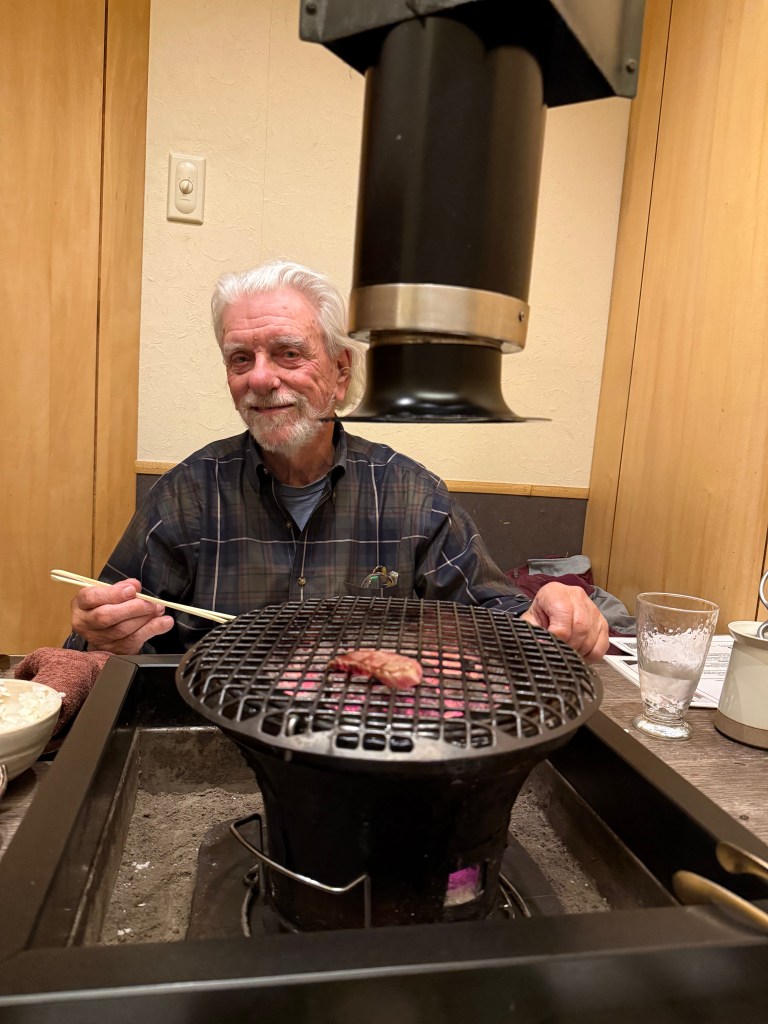
Dinner at a “beef” restaurant in our own little room and our own hibachi, another long walk back to the hotel. 15, 400 steps today. Now you know why I could not do my blog last night

November 16

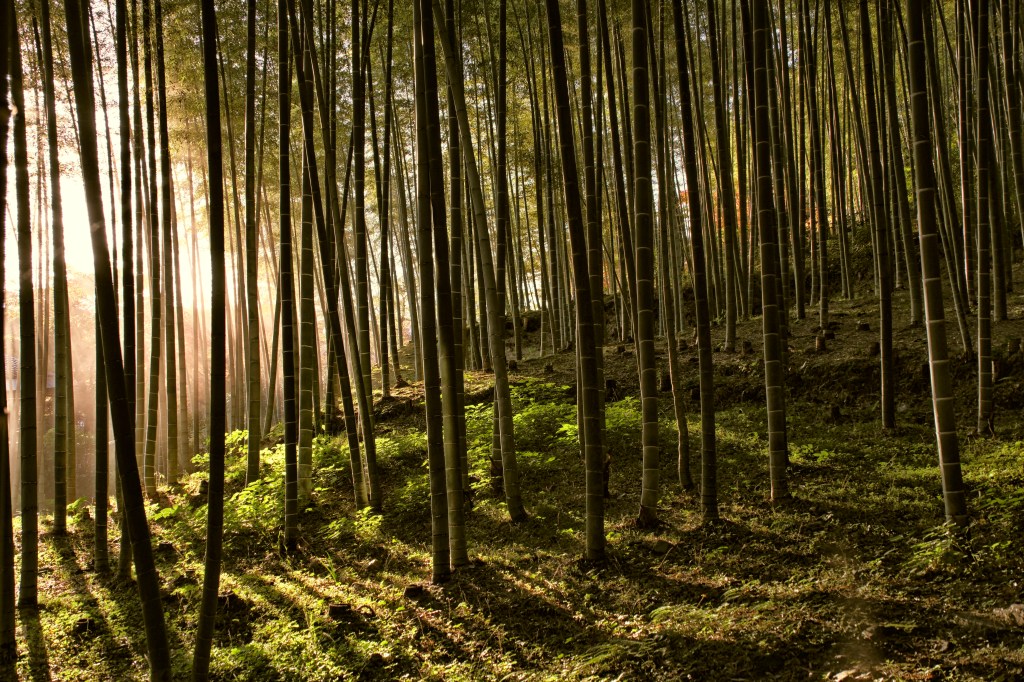
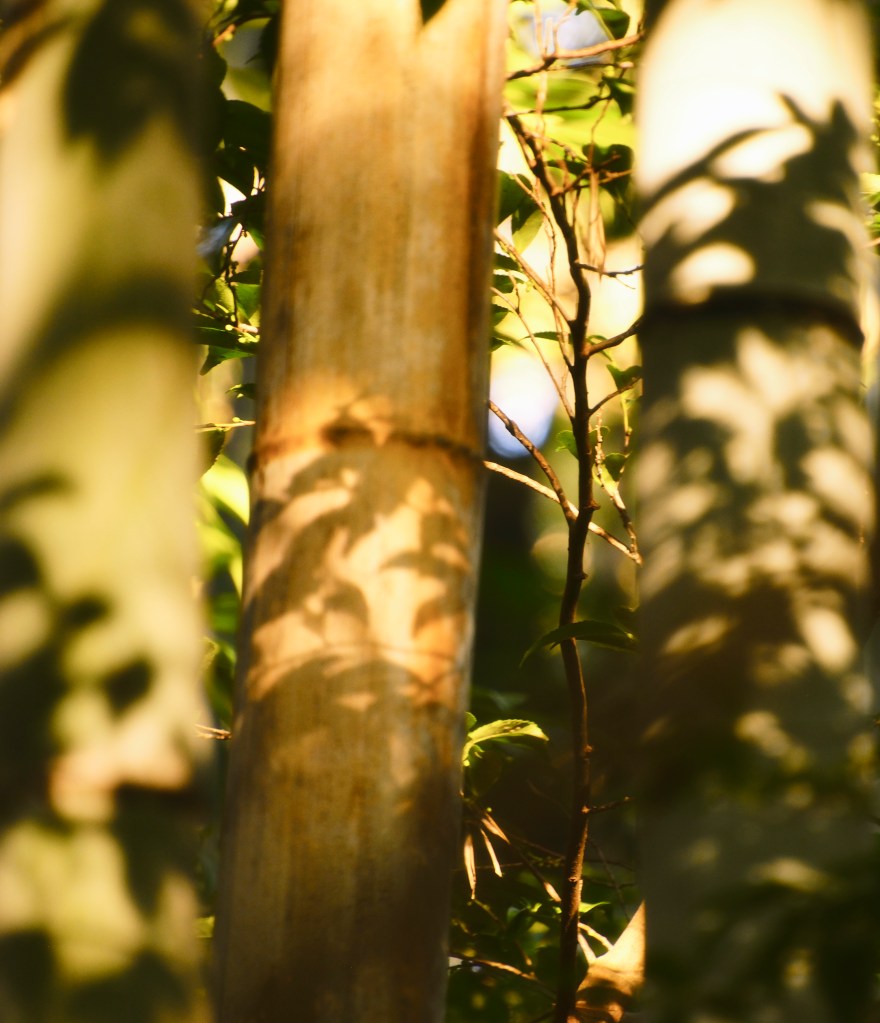
It’s 6 AM when the alarm goes off and I feel like I have walked every one of those steps I have been bragging about. Because everyone gave us the advice of going to the bamboo forest early we set out a 6:30 WITHOUT coffee. Since the sun was barely up the photo opportunities were limited until after 7:30. What was not limited were the amount of people with cell phones taking pictures of each other with the bamboo as the back drop and 50 other people in the background also taking pictures of themselves. If this is what it was like at 7 AM, I hate to think of the amount of crowds later.

Finally the sun began to rise and offered us better opportunities. We walked along the path but never did find the bridge that everyone takes pictures of. Perhaps we were in the wrong bamboo forest. I wish I had gone to a different site that offered a temple and a small bamboo forest with (it said in the guide book) few visitors.

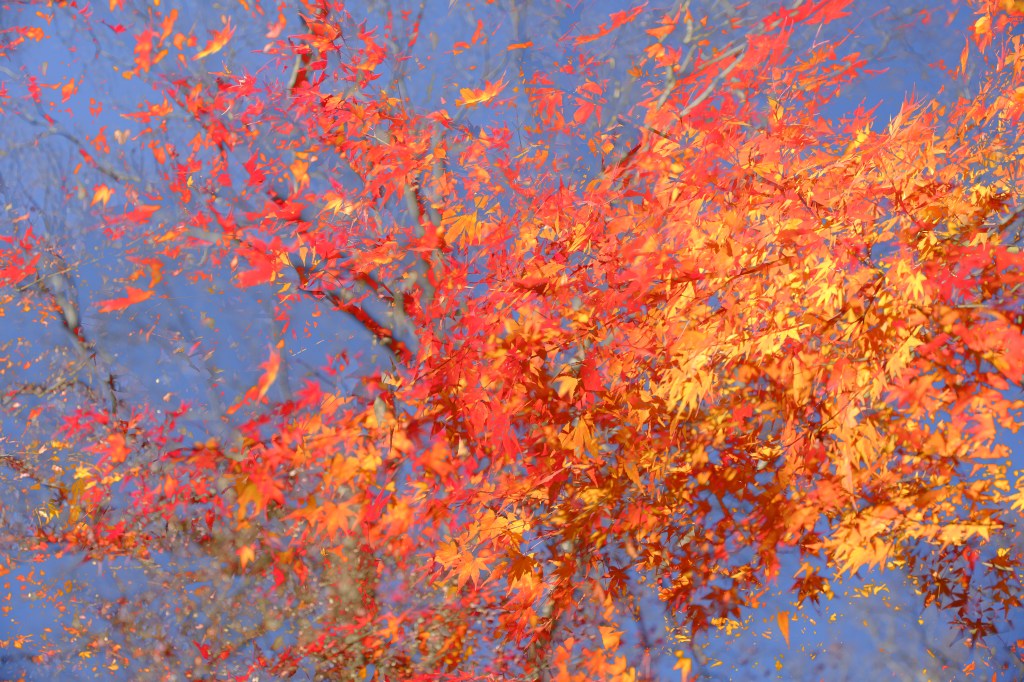
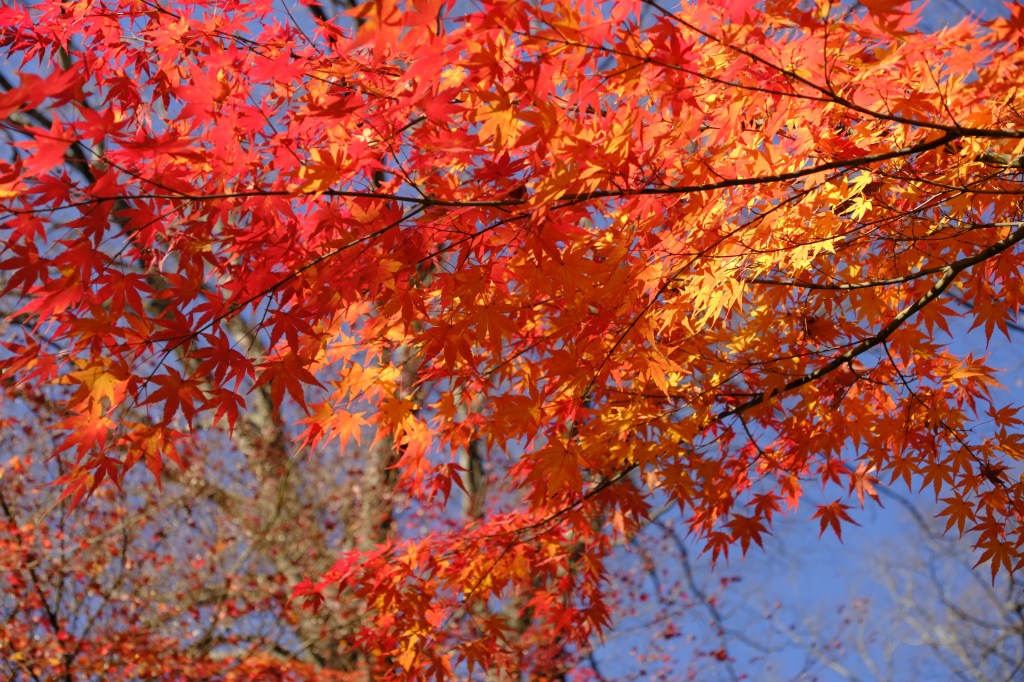
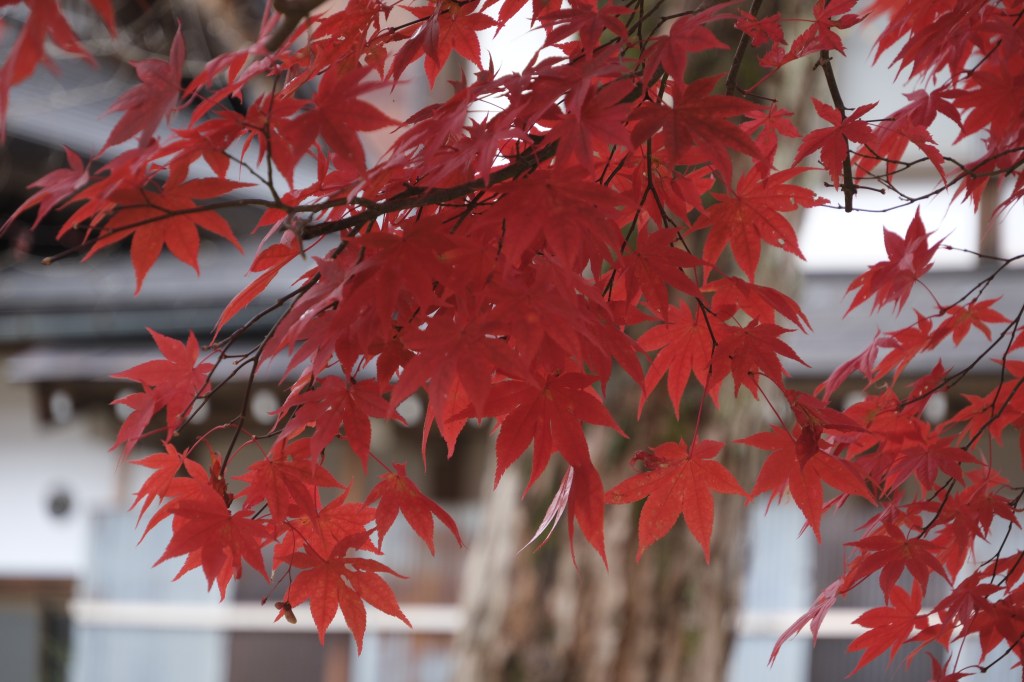
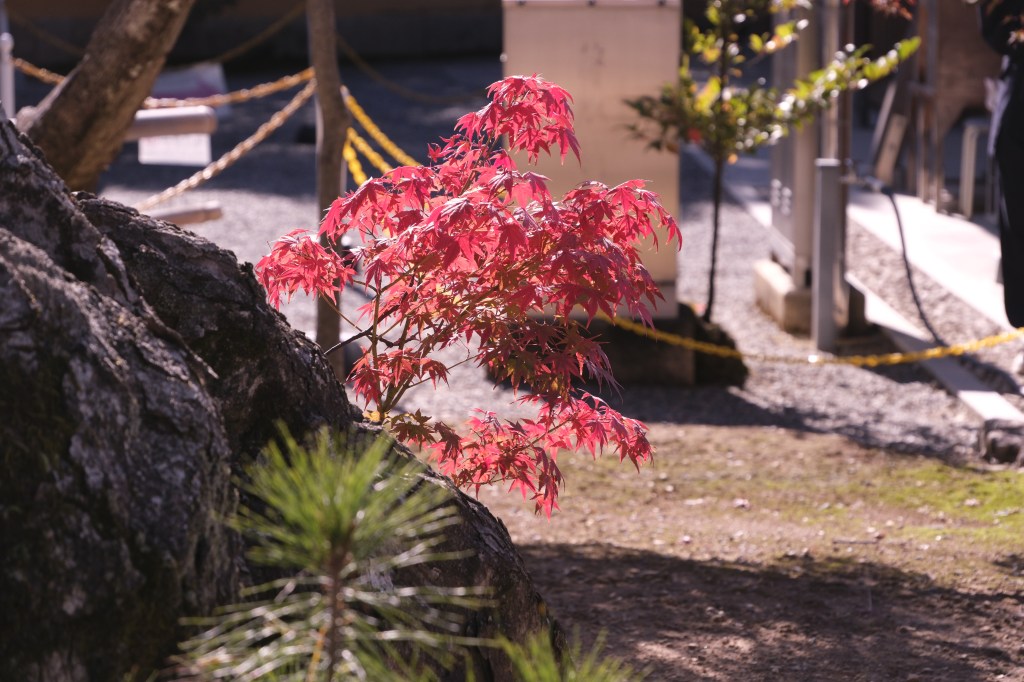
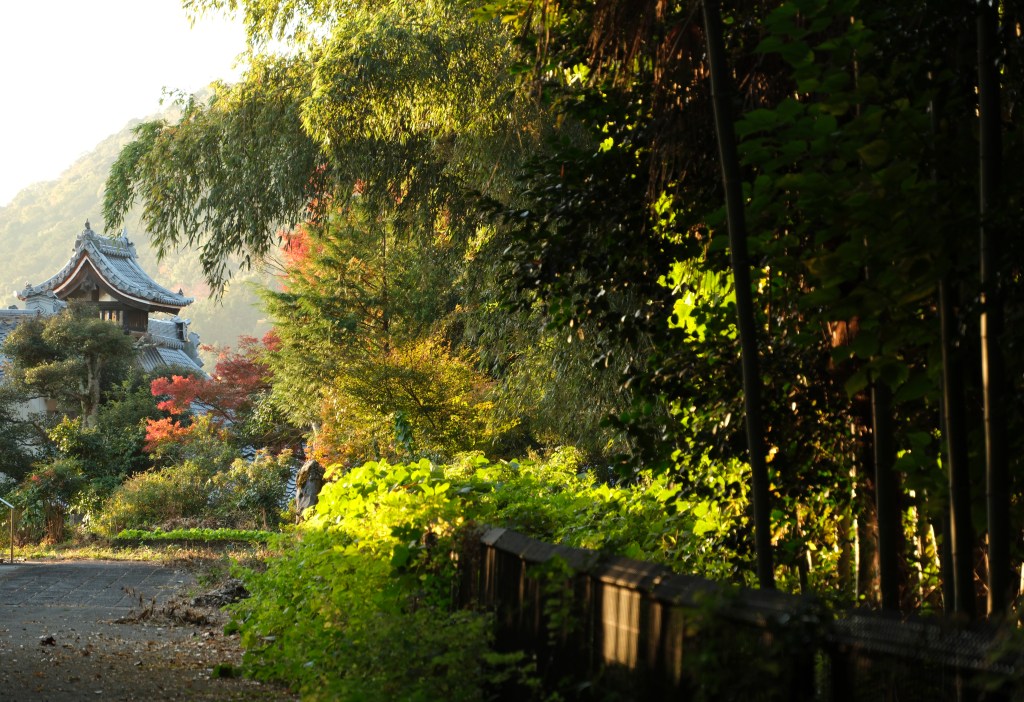
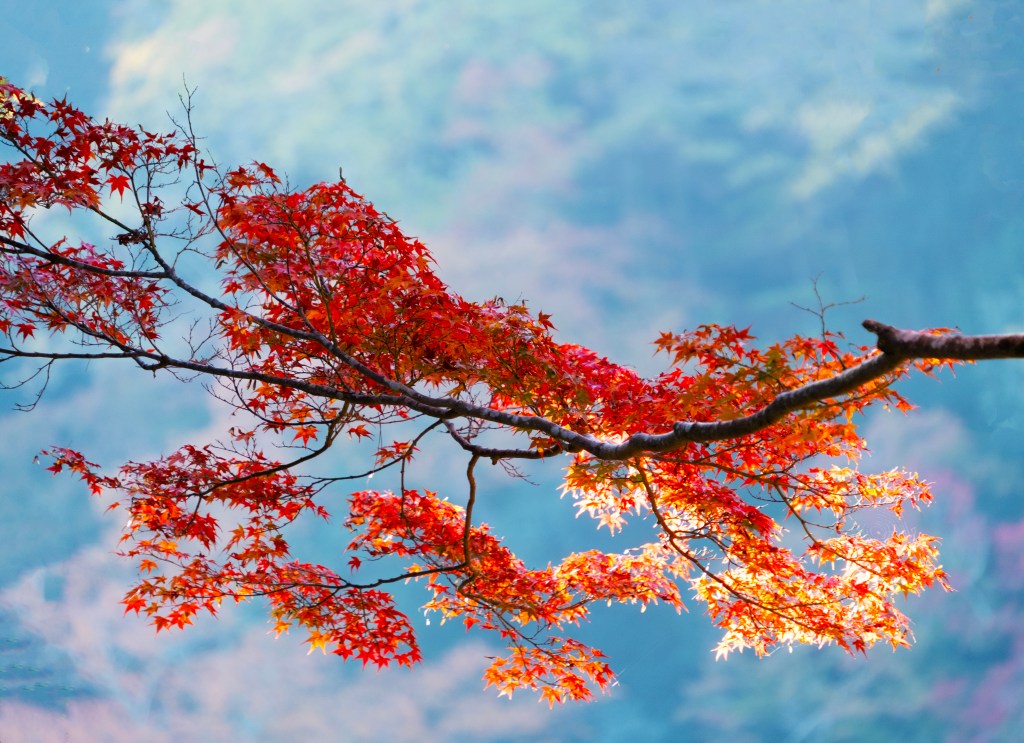
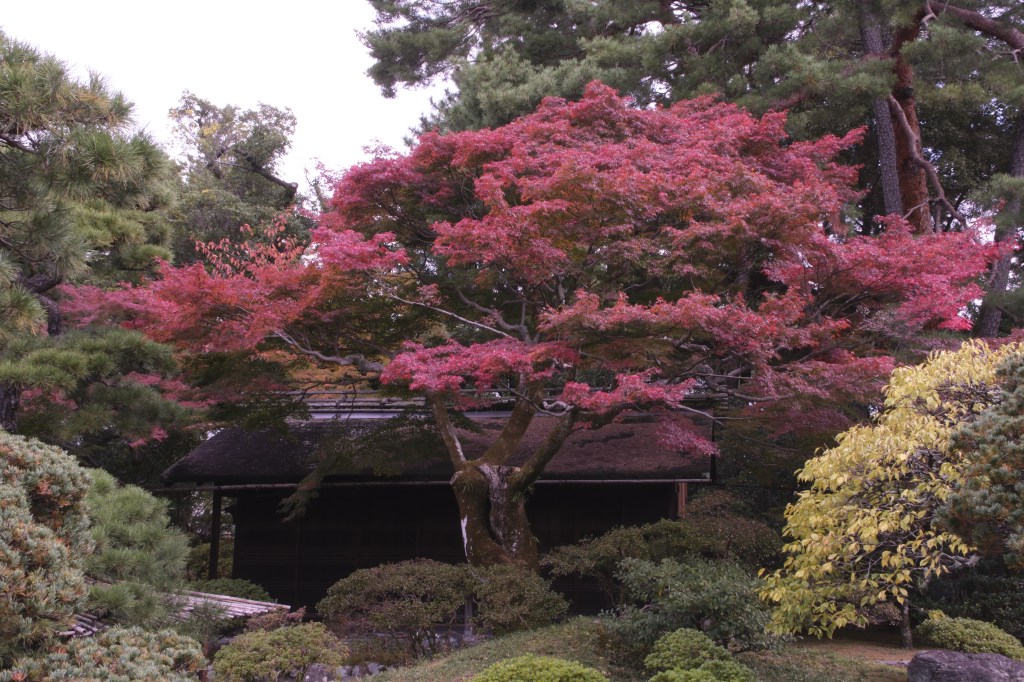
The red maple trees with the sunlight were exquisite. The beauty of them was hard to catch on camera. We walked through the bamboo, then in a more open area where the maple trees displayed their grandeur and out did the bamboo forest. Frankly I could have stayed in bed and not gone to the bamboo forest as I did not find it that exciting and picture taking was near impossible with all of the people.

We spent the rest of the day walking Old Kyoto and going to the Kyoto history museum. I came away wondering if all of the people who were living centuries ago in all cultures were at the same time period making pottery, bronze work, and creating images of humans. I find the similarities of the work, the use of stones etc. surprisingly the same, especially the human form.

I will admit after two days of walking 7 miles each day and piling another 6 miles today, I am feeling it in all of my bones. Tomorrow we move on by train and to a ceramic workshop.

Japan November 2025

November 14, 2025

Rain, sleet, snow, ice was what we left behind in Stowe as we made our way to Montreal for the night on the 11th of November. Up early to get a 9 AM flight to Vancouver and onward to Kyoto. After a somewhat restless nap on our day flight across the Pacific we arrived at our hotel, Noku, in Kyoto around 8 pm. Beautifully decorated in the Japanese style, we inspected the toilet and tried out the various options from heated seats to the bidet. What we couldn’t figure out, with all the various buttons, was how to flush the damn thing. As I was about to ask Google, Shap found the handle on the side of the counter, a bit of a distance from the toilet. Go figure that one.

Today, Friday ? Really? We are going to bed as you guys are sound asleep. Right now as I am writing this at 4:41 PM it is 2:41 AM in New York. So confusing.

Breakfast was interesting. I decided to try the Japanese breakfast which started as miso soup (very good),salmon and on to Japanese eggs, a tiny rectangle of yellow that tasted sweet. No idea what that was. Lots of pickles and mushrooms. Nothing weird to speak of, no one swimming in my miso that shouldn’t be.

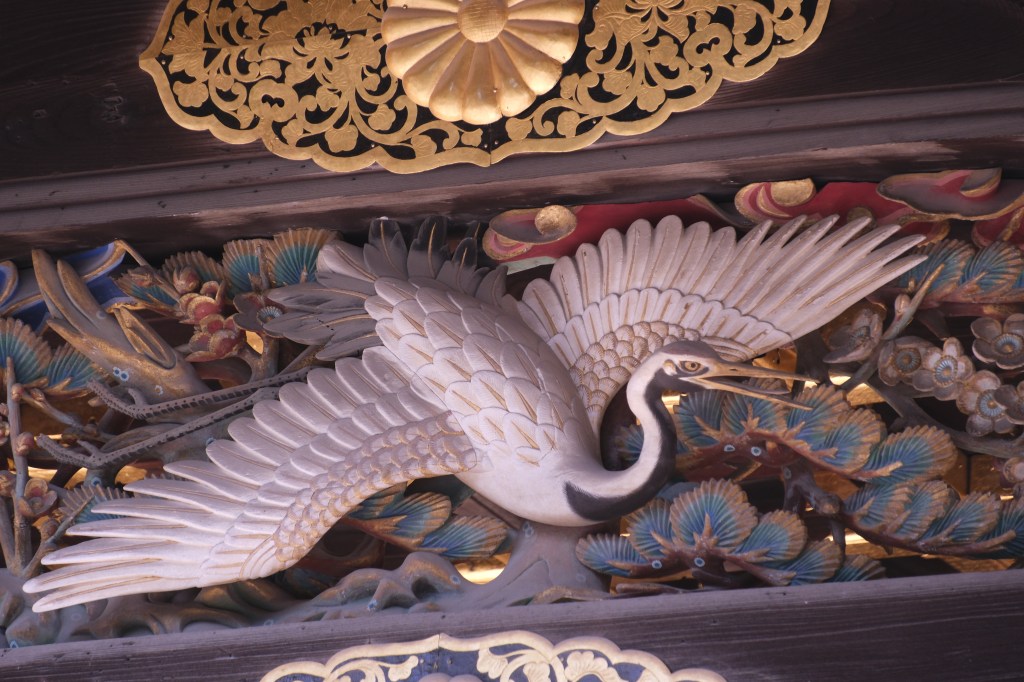
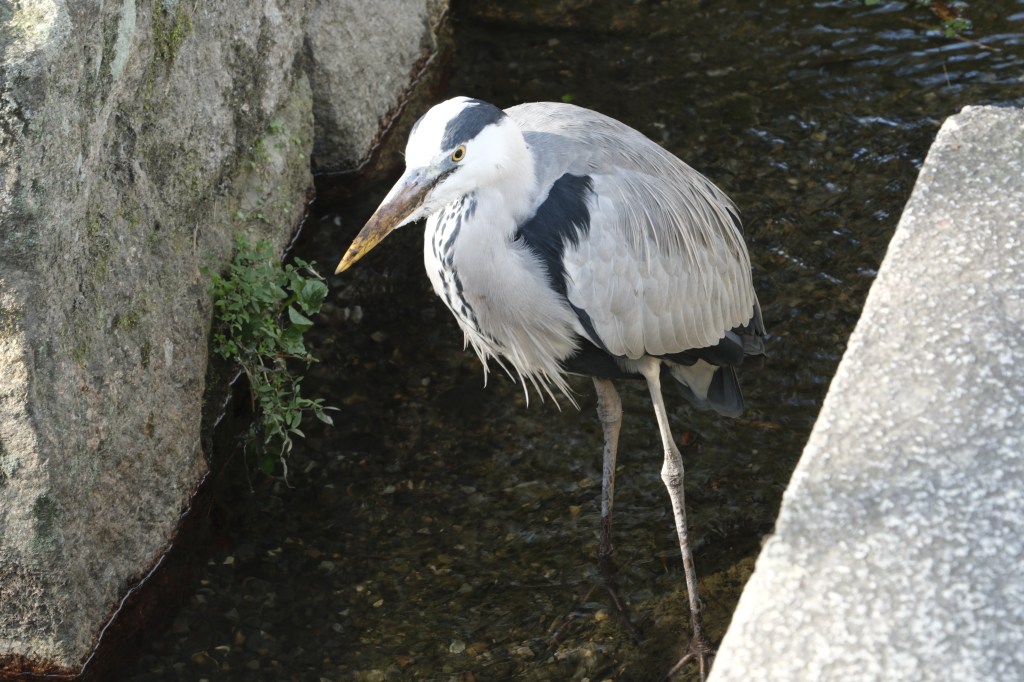
We decided to walk to the Textile Museum with a stop at the Imperial Gardens on the way. A tour of the palace was a surprise, as I thought it was closed. Seems no one was up before 11, as there were few people out and about til we got to the palace at 11. The crows or ravens, not sure which as I could not get a close look, circled from tree to tree around us, while talking amongst themselves with the loudest caw. They fascinate me. Name the bird below, we found him wading in the water, is he heron? Could he be a crane, I don’t think so.

Another long walk to the textile museum with a wonderful display of old and new looms. Having been a weaver, I was blown over by the intricacy of the designs, silk threads, patterns and the threading of the looms which were so complicated. The museum part showed various woven silk exquisite designs. From there to a shop, Aizen Kobo, that is located in a back street. The history is interesting as it was once known for the delicate tedious finger weaving technique that produces complicated relief brocade patterns. Women would file their fingernails into 5 grooves to be able to push the weft threads tight against the woven material. They used their fingers instead of the comb. As there was less demand for these kimonos in the 1920’s the father of the now owner, decided to go in the direction of folk art and began indigo dyeing fabrics. Today they are world famous with many of their clothes in museums such as the Albert and Victoria museum. Kenichi Utsuki, the current owner, taught classes at Columbia. The building is over a century old and has been recognized as a Cultural Asset.

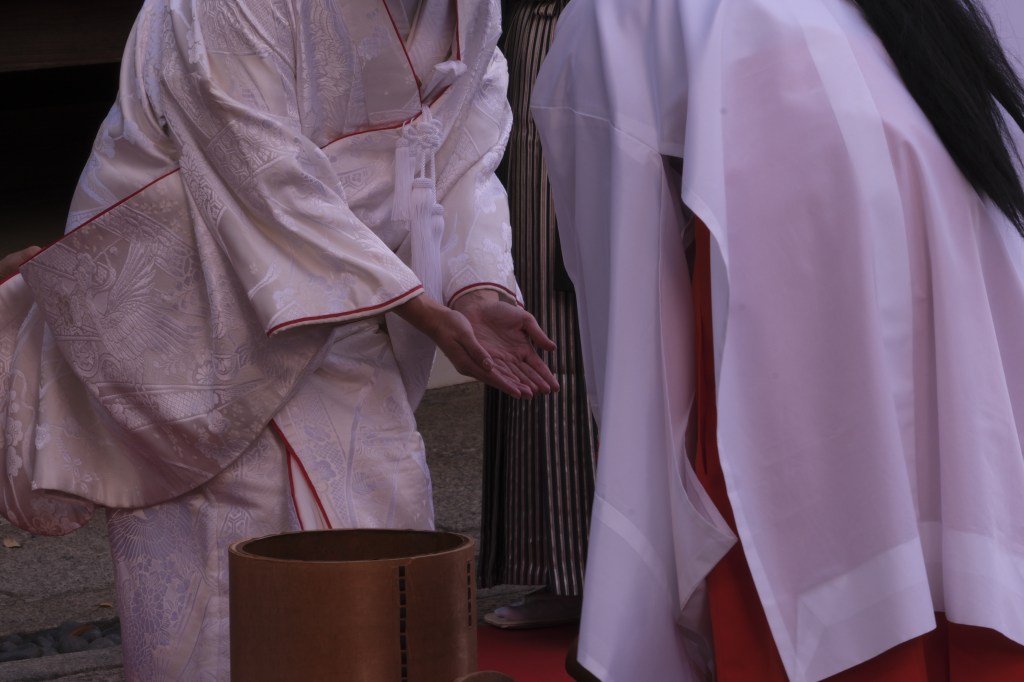
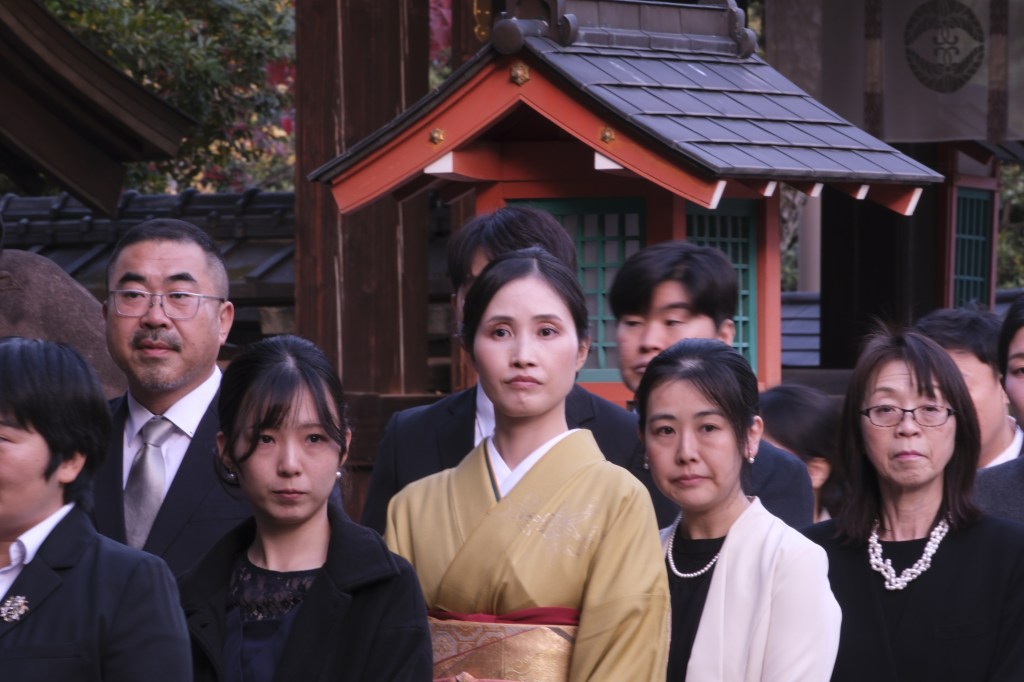
Heading back to the hotel, we stepped into the shrine of the warthog. Who would make a shrine to a warthog. I will have to look that one up. There was a wedding ceremony happening so we took pictures. Check out the head dress on the bride. Don’t think the groom is going to do any kissing of the bride at the end of this ceremony. Seems Shap and I are always crashing weddings, so far in India, Romania and now Japan.

Thirteen thousand steps and more to go today. Enjoy some of the pictures.

Good-bye Romania

Day 10 -12

I am sitting in the Newark airport waiting for my flight to Burlington which does not leave for two hours. I am so sick of lugging around my backpack, and what is so kindly referred to by the group as my “Mary Poppins” bag.  This bag has a reputation because you never know what is popping out of it from pillows to passports, money, tickets, Kindle, phone, glasses etc. Now I wish I had an umbrella to fly me to Stowe.

There was no time to write the last couple of days as we would pull into the hotel around 7 pm and rush to dinner. By the time we were through I was too exhausted to go through pictures and write.

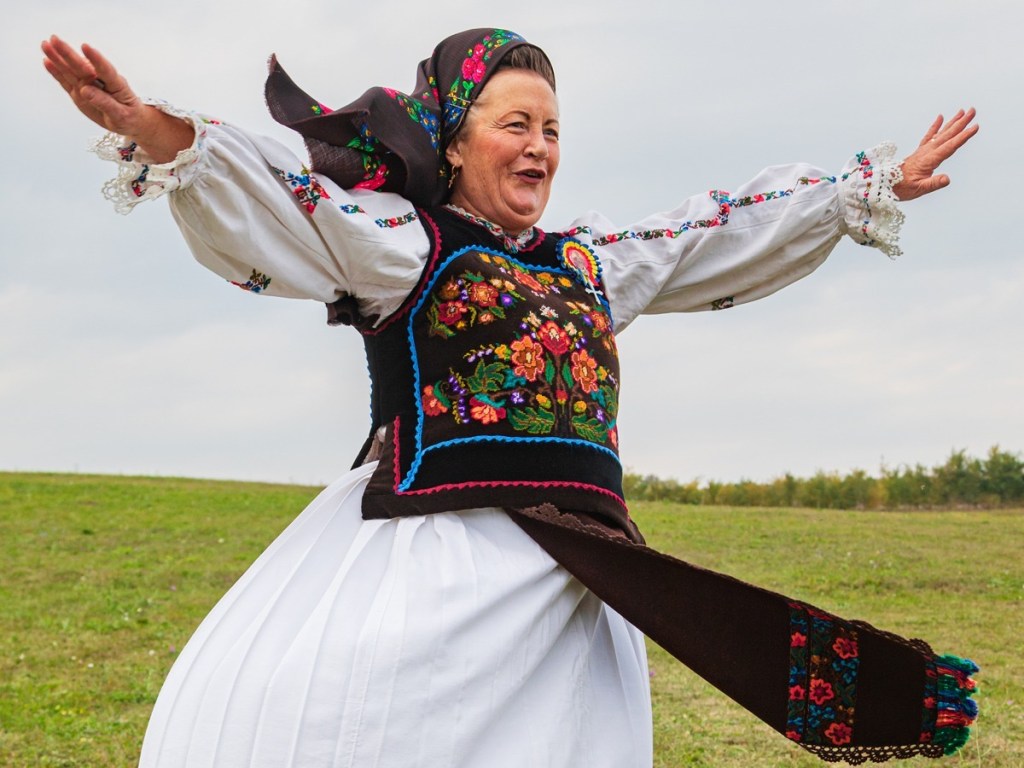
How to describe this trip and get across the romance of Romania. Before I went, I did not know if Romania would be bordering on a poor country, still struggling from the aftermath of communism or if it has been able to bring the country into modern times. What is so wonderful about Romania is the rural areas. The people have maintained the old traditional ways and blended some technology to their world. It amazes me that we can’t get cell service in Vermont in many places and yet in Romania even the poorest villages down in the valleys have service.

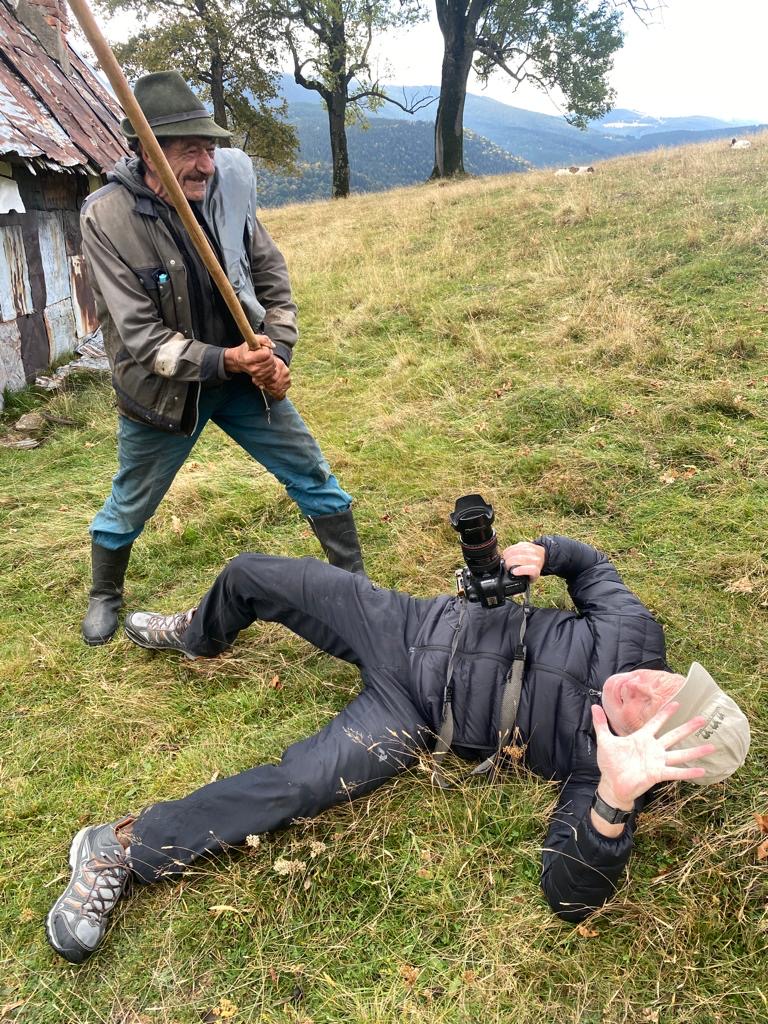
The landscape is varied driving from open land to high mountain tops. Curve after curve as the road winds up the mountain, brings spectacular views of the valleys below. The leaves are changing on the trees which provide a backdrop of shimmering gold meadows against the multitude of sheep. The shepherds and their dogs are always willing to share a story, allow us to take their pictures and talk to us about their job. Sheep roam the countryside while the dogs keep them reined in and protected. It was always a question when we stepped into the meadows if the dogs would attack. Our Romanian guide kept a whip handy in case, but if the shepherd was nearby, he had complete control of the dogs and if we stayed together there was not a threat.

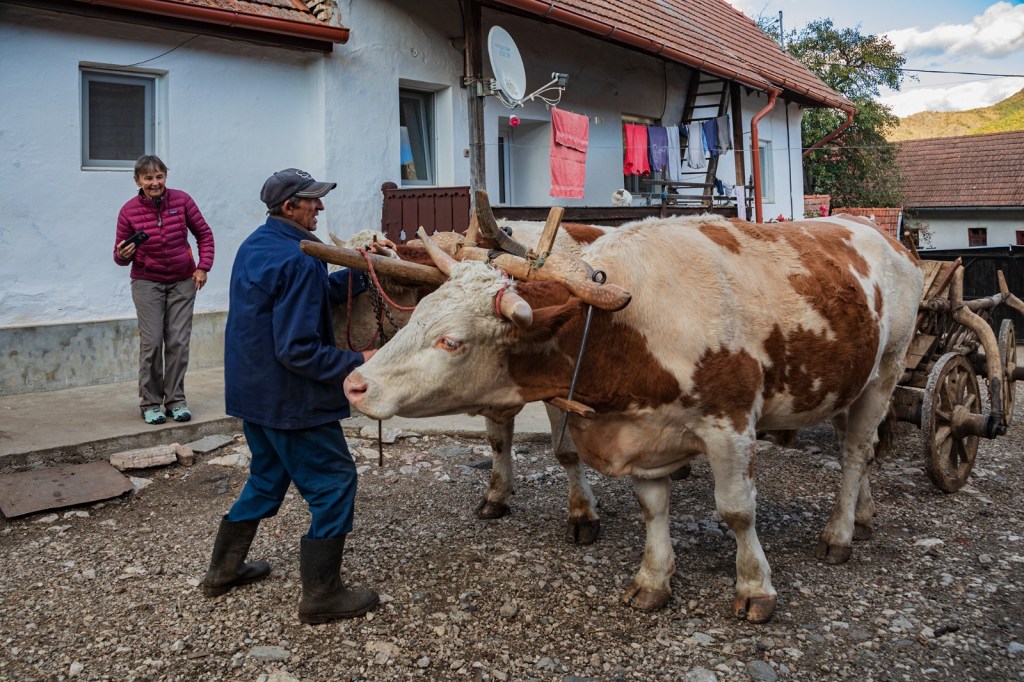
The farmers with their ox and carts would stop and talk with us while hauling wood or other products. They would allow us to take pictures of their cows getting milked or of them cutting their fields with a sickle. The goats loved to come and be petted and nibble on our shiny jewelry. The churches, seemed to grow in the countryside like meadow mushrooms, doting the picture-perfect landscape. There was not a turn in the road to disappoint us photographers.

Now I have my answer to the question of “Why Romania?” It is a place that makes you believe there are people who care for our planet, who respect their environment and are trusting enough to let a group of photographers into their homes to share their way of life.